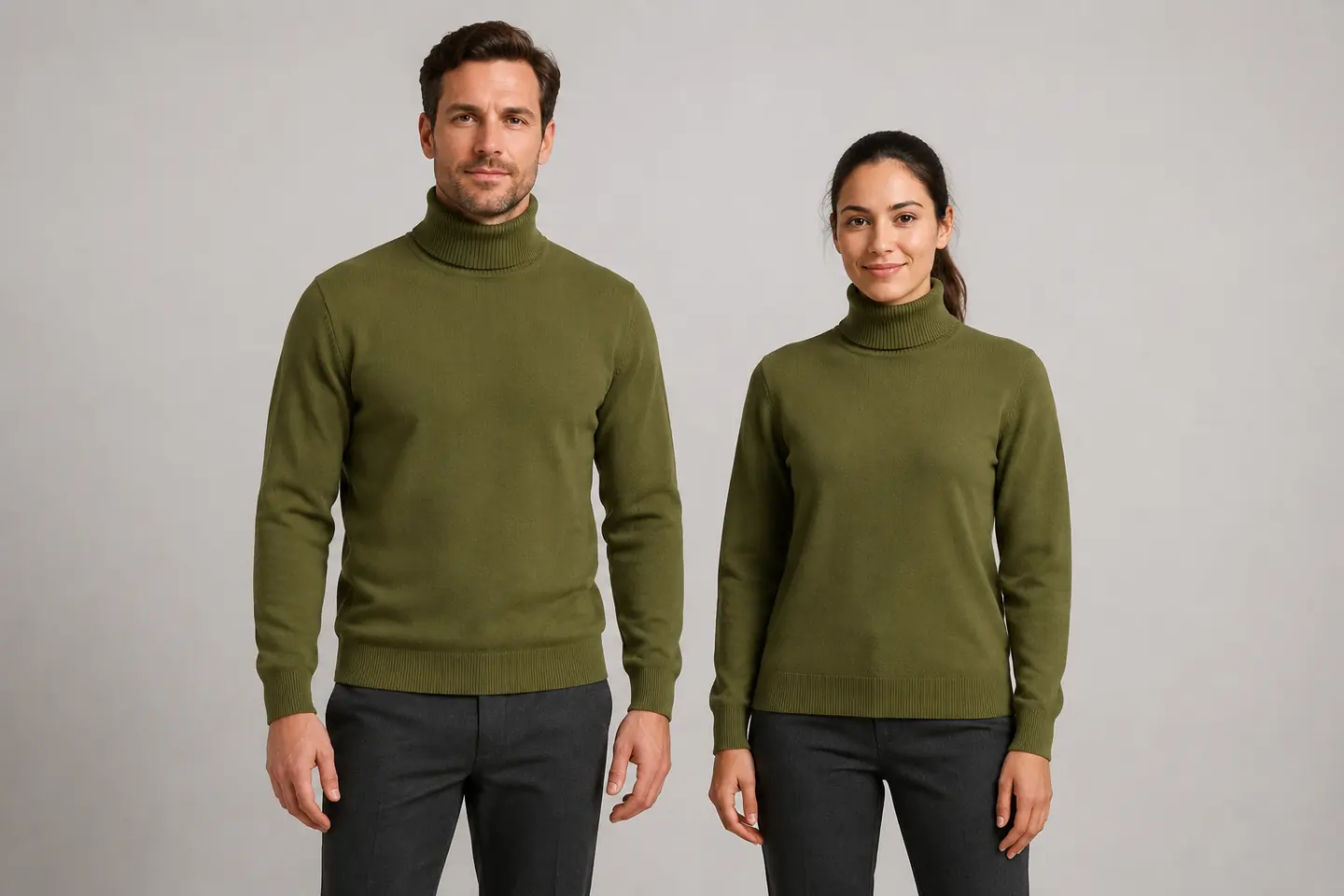
A unisex product can be offered to men and women, but that does not mean one size or one fit will suit every wearer. For a thermal uniform order, approve the intended fit on representative users before confirming the size allocation. The image is an AI-generated fit illustration, not a photograph of an approved production sample.
Separate body measurements from garment measurements
Ask for two clearly labelled references: the target wearer's body measurements and the finished garment measurement chart. They answer different questions.
Record the measurement unit, measurement points and method. A flat chest width is not a body chest circumference; explain whether a dimension is taken flat, around the body or with the knit relaxed.
Agree the intended ease for each layer. A close-fitting base layer and a sweater worn over another garment should not automatically share the same chart. Do not translate S, M or L into another market's sizes without checking the dimensions.
Review a size set, not just a middle size
A single approved medium sample does not establish that the full size range fits. Agree which sample sizes and wearer profiles will be assessed before bulk production.
Include the smallest and largest ordered sizes, plus relevant intermediate sizes or body shapes. Review shoulder placement, chest and hip ease, sleeve and body length, and neck comfort. Identify requirements that cannot be met by the proposed unisex block.
If a different length or fit option is needed, discuss its development separately. Record each sample's size, version and comments; an accepted appearance photograph alone is not a complete dimensional approval.
Trial the intended layers and movements
Assess the garment in the actual layering arrangement planned for the uniform, not only while standing still in a studio.
For a base layer such as T1-FW001, review fit underneath the planned uniform. For sweaters such as T1-FW004 or T1-FW005, check room over the intended inner layer. Have representative wearers reach forward and overhead, sit and bend; record restriction, riding up or unwanted bulk.
Agree any care-conditioning procedure before comparing measurements again. Record the procedure and acceptance limits for the project rather than assuming universal shrinkage or stretch values. A fit trial does not prove thermal performance or protective certification.
Lock the size chart and order allocation
Bulk-order approval should connect the accepted sample to a version-controlled measurement chart and the quantity required in each size.
Confirm measurement points, grading between sizes, agreed tolerances, size labels and any approved fit variants. Resolve comments and approve the final version before relying on it for cutting, sewing or packing checks.
Send Leading Protective the intended users, destination market, layering plan, size range and quantities by size. Use the linked products as starting references; sample availability, pattern adjustments and commercial terms are confirmed for the specific enquiry.
Buyer brief checklist
- Target wearers and destination market
- Body chart and finished garment chart, with units and measurement method
- Intended ease and layering arrangement
- Sample sizes and representative wearer profiles
- Movement observations and any agreed care-conditioning procedure
- Approved chart version, grading, tolerances and label wording
- Order quantities by size and approval owner
Products connected to this solution
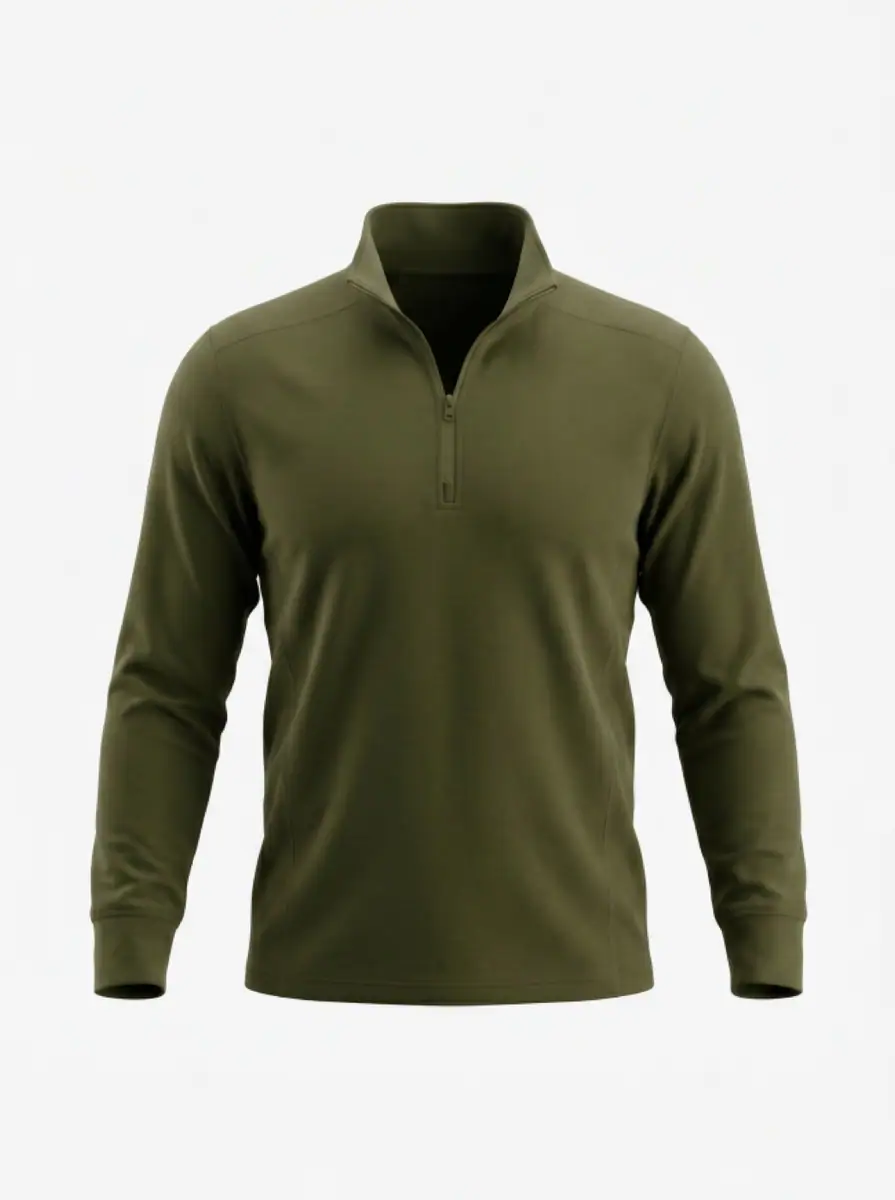 T1-FW001
Military Thermal Underwear Set
A base-layer reference for reviewing fit underneath the planned uniform system.
View product details ↗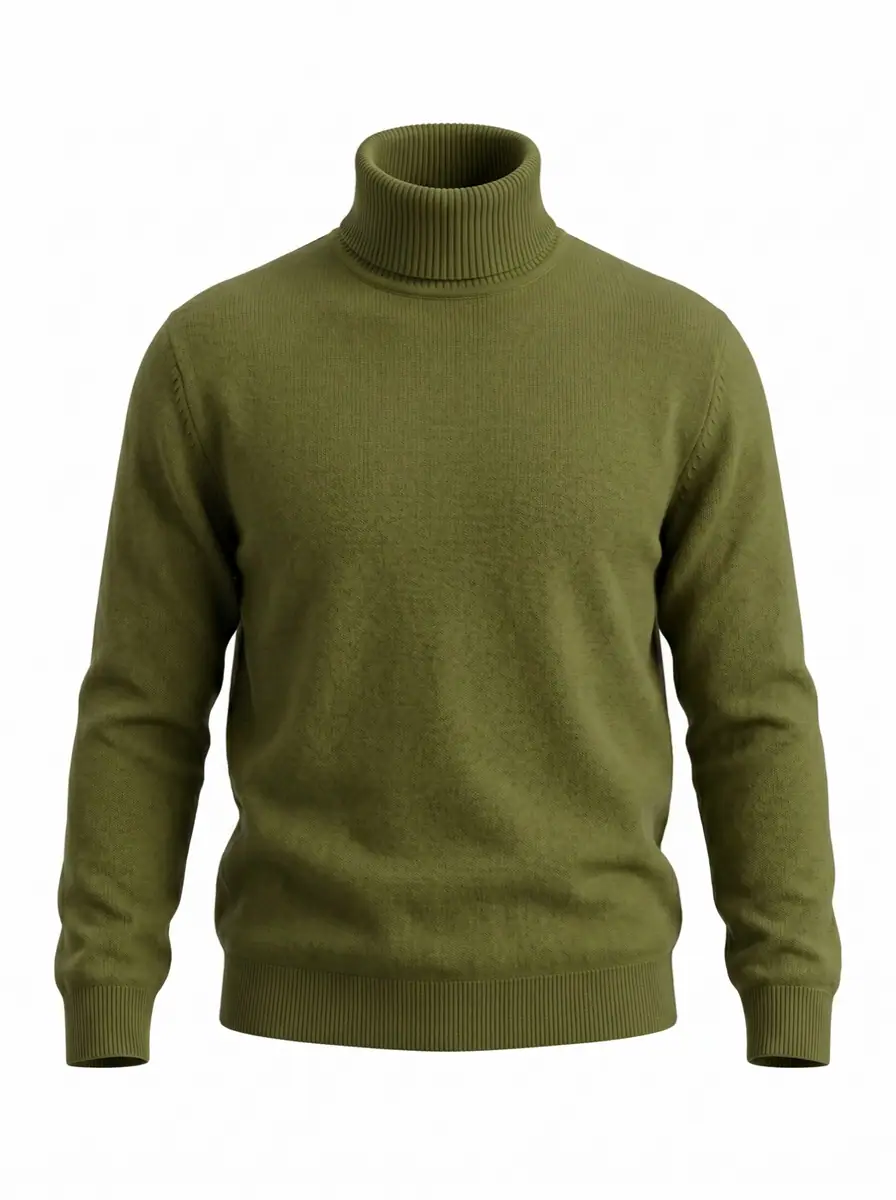 T1-FW004
Training Turtleneck Sweater
A unisex sweater reference for checking neck comfort, sleeve length and layering room.
View product details ↗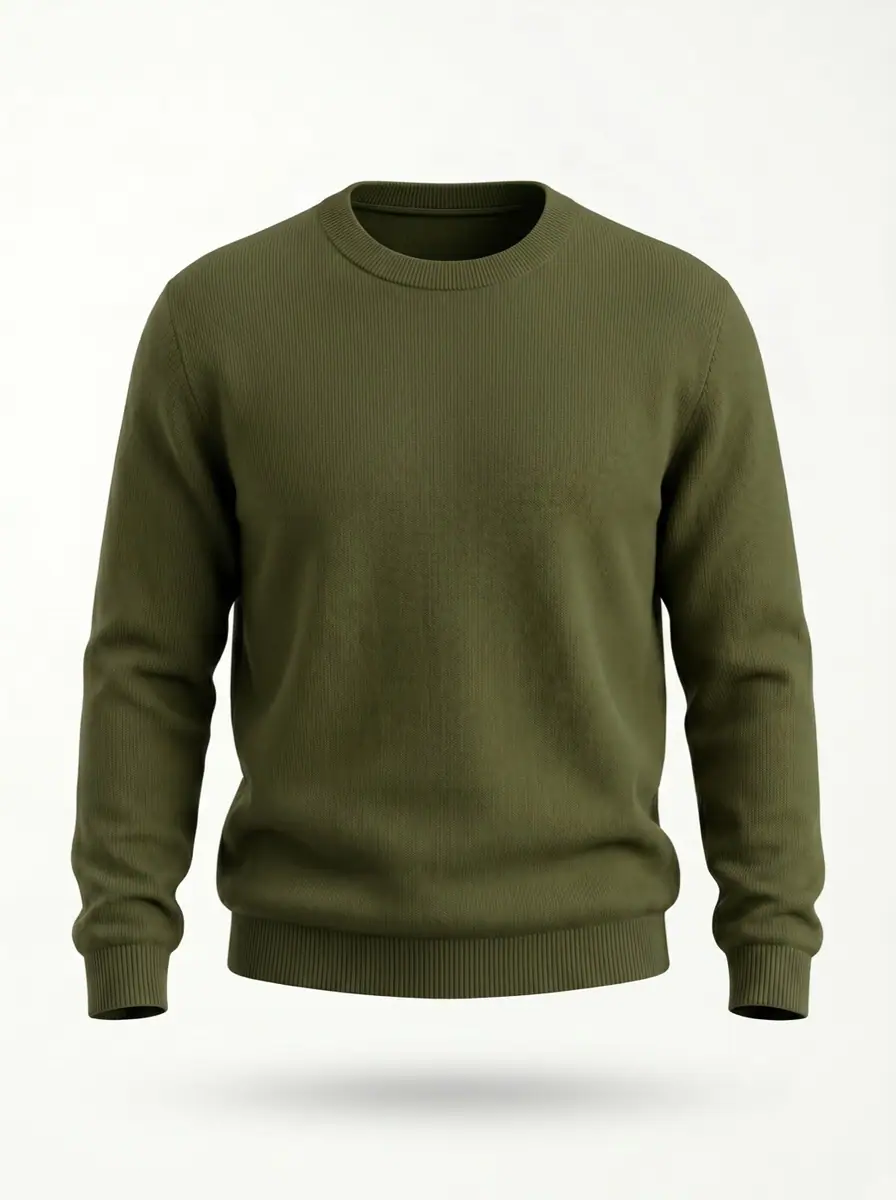 T1-FW005
Training Thermal Sweater
A thermal sweater reference for reviewing movement and the proposed size range.
View product details ↗