
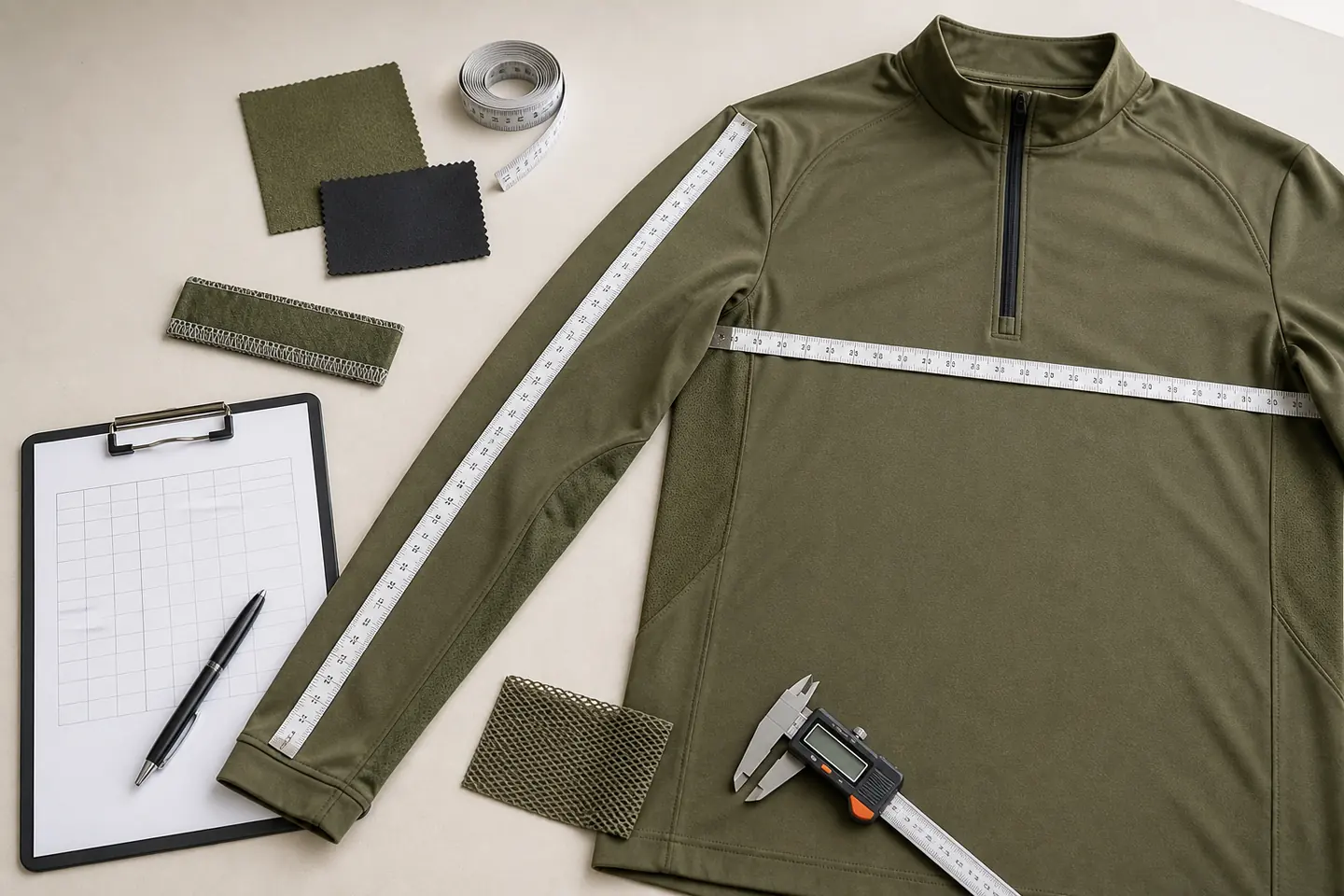
A useful quality plan does not begin with the phrase ‘good workmanship.’ It begins with an approved product reference and a written agreement on materials, measurements, construction, visual standards, inspection timing and the evidence the buyer needs before shipment.
Lock the approved product reference
The inspection plan must point to the same approved garment, specification and artwork used by production.
Record the approved material direction, colour reference, size chart, measurement method, construction details, labels, branding and packing requirements in one controlled reference set.
Separate fixed requirements from items that remain project-specific. Test methods, tolerances and acceptance criteria should be agreed for the actual buyer, product and destination rather than assumed to be universal.
Put controls where correction is still possible
Incoming and in-process checks reduce the risk of discovering a repeated problem only after garments are complete.
Define which materials, trims and components require identity, colour, quantity or condition checks before cutting and assembly.
During cutting and sewing, review high-risk construction points such as grain direction, panel matching, seam formation, stitch security, attachment position and measurement drift. The checkpoint should match the garment design and approved sample.
Define the final inspection package in advance
The buyer and supplier should know what will be reviewed, how the sample is selected and which records will be retained.
Agree the applicable sampling route, measurement points, workmanship criteria, functional checks, packaging review and handling of nonconforming findings before production starts.
Use clear photographs, measurement records and test documents only where they correspond to the approved project. A generic certificate or unrelated report should not be presented as evidence for a specific order.
Turn findings into repeat-order control
Inspection is most valuable when it improves the next production run as well as the current shipment decision.
Link findings to the affected size, colour, operation or component, record the agreed correction and verify the result before release.
For repeat orders, compare any material, pattern, component, artwork or packing change against the approved reference and update the quality plan when the product or buyer requirement changes.
Buyer brief checklist
- Approved sample and controlled specification
- Material, colour and component references
- Measurement method and buyer-agreed tolerances
- High-risk sewing and assembly checkpoints
- Sampling, workmanship and functional review route
- Packaging, labels and shipment-document requirements
- Nonconformity, correction and repeat-order records
Products connected to this solution
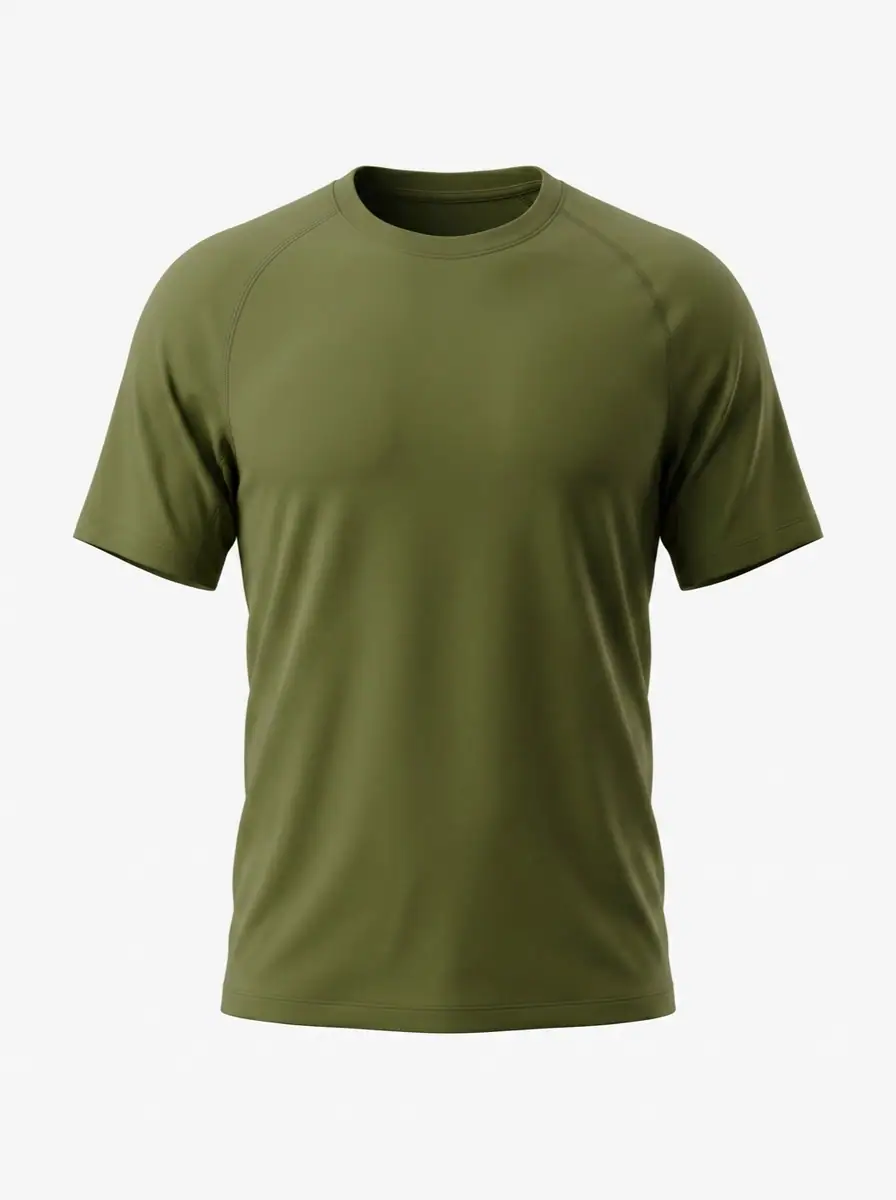 T1-FC001
Military Cooling T-Shirt
PCM cooling base-layer direction where fit, seam construction, measurements and colour references should be controlled against the approved sample.
View product details ↗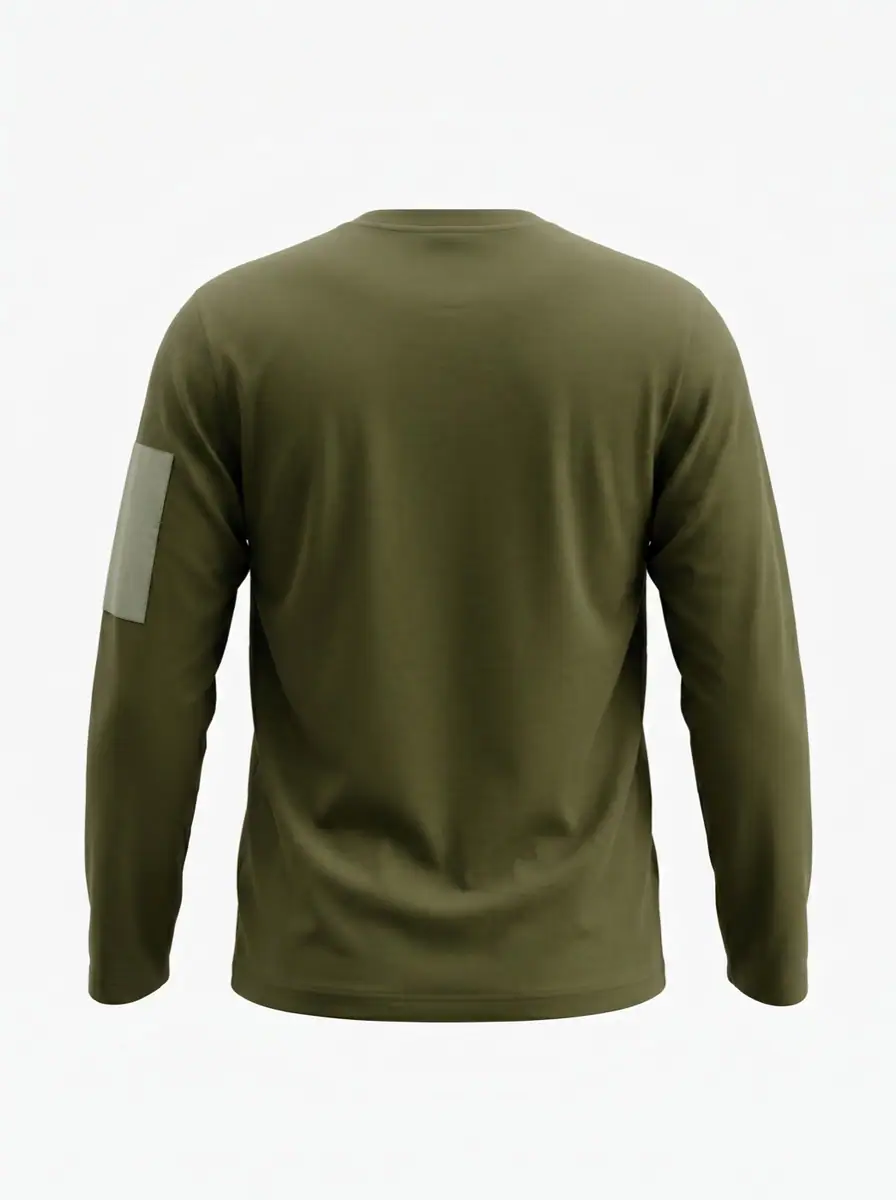 T1-FW003
Military Long-Sleeve T-Shirt
Long-sleeve utility layer with construction and measurement details suitable for a documented garment inspection plan.
View product details ↗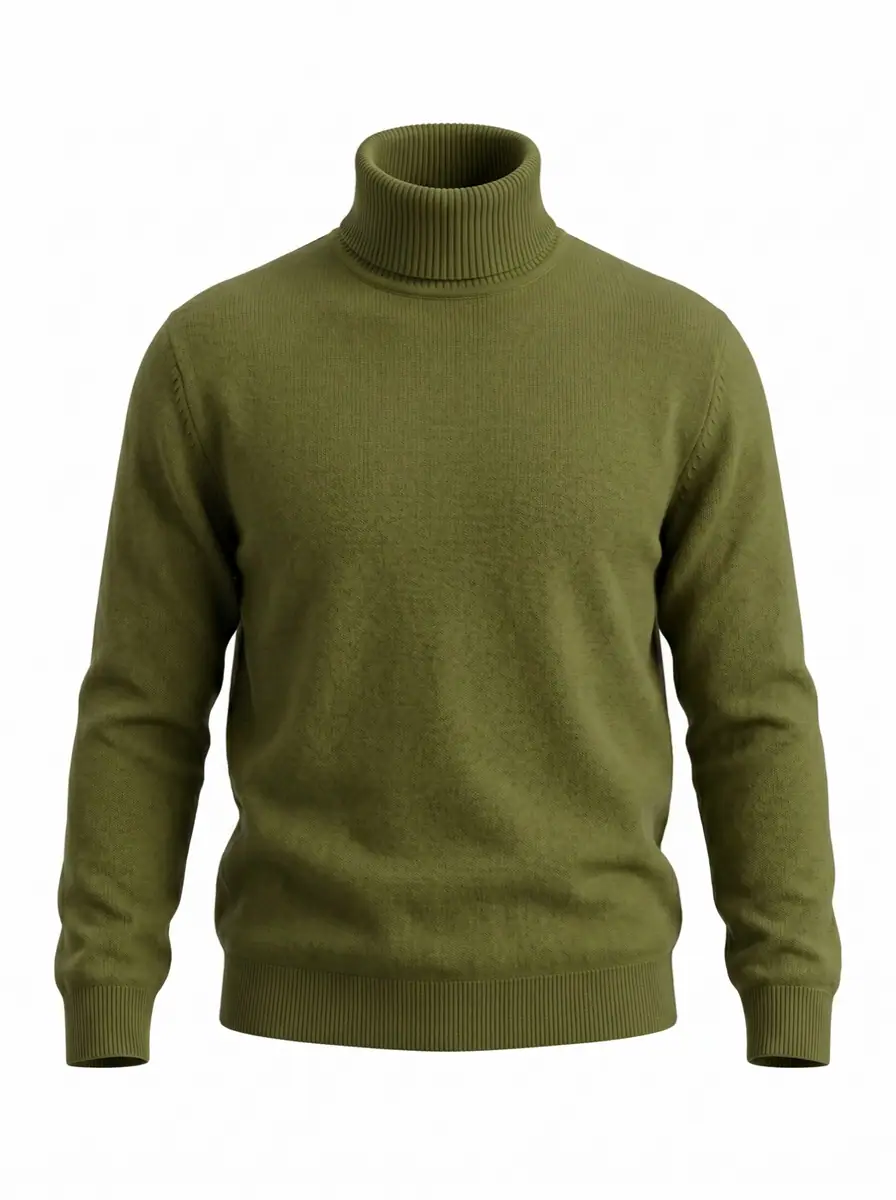 T1-FW004
Training Turtleneck Sweater
Unisex training turtleneck requiring coordinated review of knit appearance, dimensions, neckline, branding and packing.
View product details ↗