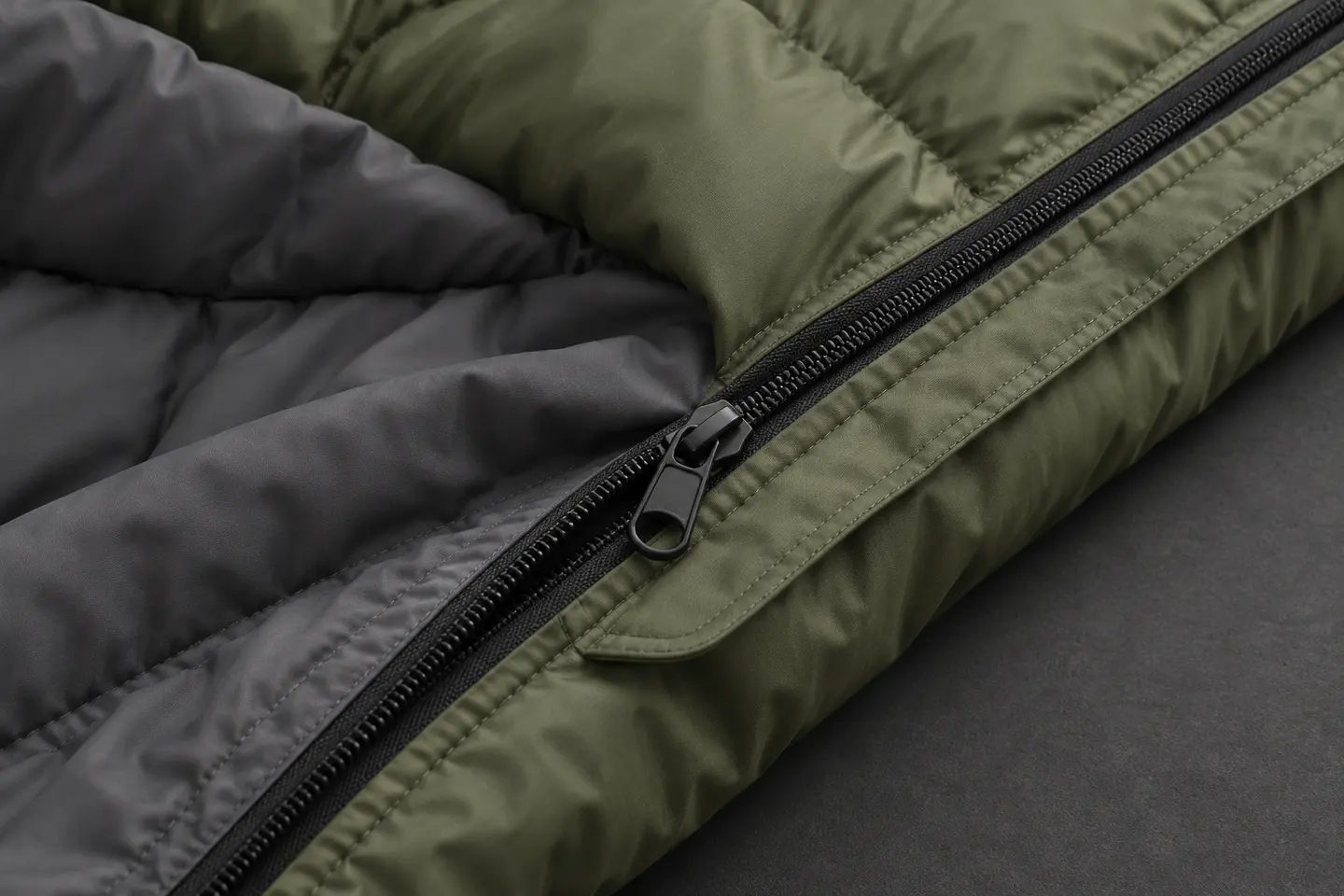
Review the finished bag in the positions in which users will open and close it. Agree how to identify and record a snag, then repeat the check after any relevant change. The image is conceptual.
Define the closure and its surroundings
Specify the closure together with the lining, guard and draft tube where fitted.
Record the opening side, length and slider orientation. Mark where loose lining or the edge of a guard can reach the slider at the curve, ends or construction joins.
Agree inside and outside access and whether gloves, bulky clothing, a liner or a mat are part of the intended setup.
Repeat the check on the assembled bag
Observe how the closure travels and where material enters the slider.
Start with the bag flat, then repeat in the intended occupied position using the agreed clothing and mat. Define the number of runs, direction, sample sizes and conditioning with the buyer.
Record the sample ID, position, direction and any caught fabric, halted travel or visible damage. Agree what requires a hold and how to repeat an uncertain result. Keep the closure check separate from thermal validation.
Keep the approved configuration traceable
Sign off the assembled reference and review changes that could alter clearance.
Keep photos of the inside and outside and record the zipper and lining revisions. Before using a changed slider, fabric or guard, repeat the relevant checks on an assembled sample.
For a quotation, share the drawing, intended setup, size quantities and requested evidence. Confirm sample scope, pricing and timing for that configuration.
Buyer brief checklist
- Opening side, length and slider orientation
- Lining, guard, draft tube and revision IDs
- Inside and outside access, clothing and gloves
- Positions, cycles, samples and conditioning
- Snag definition, hold decision and repeat check
- Size quantities, evidence and quotation scope
Review sleeping systems ↗
Review quality and sample checks ↗