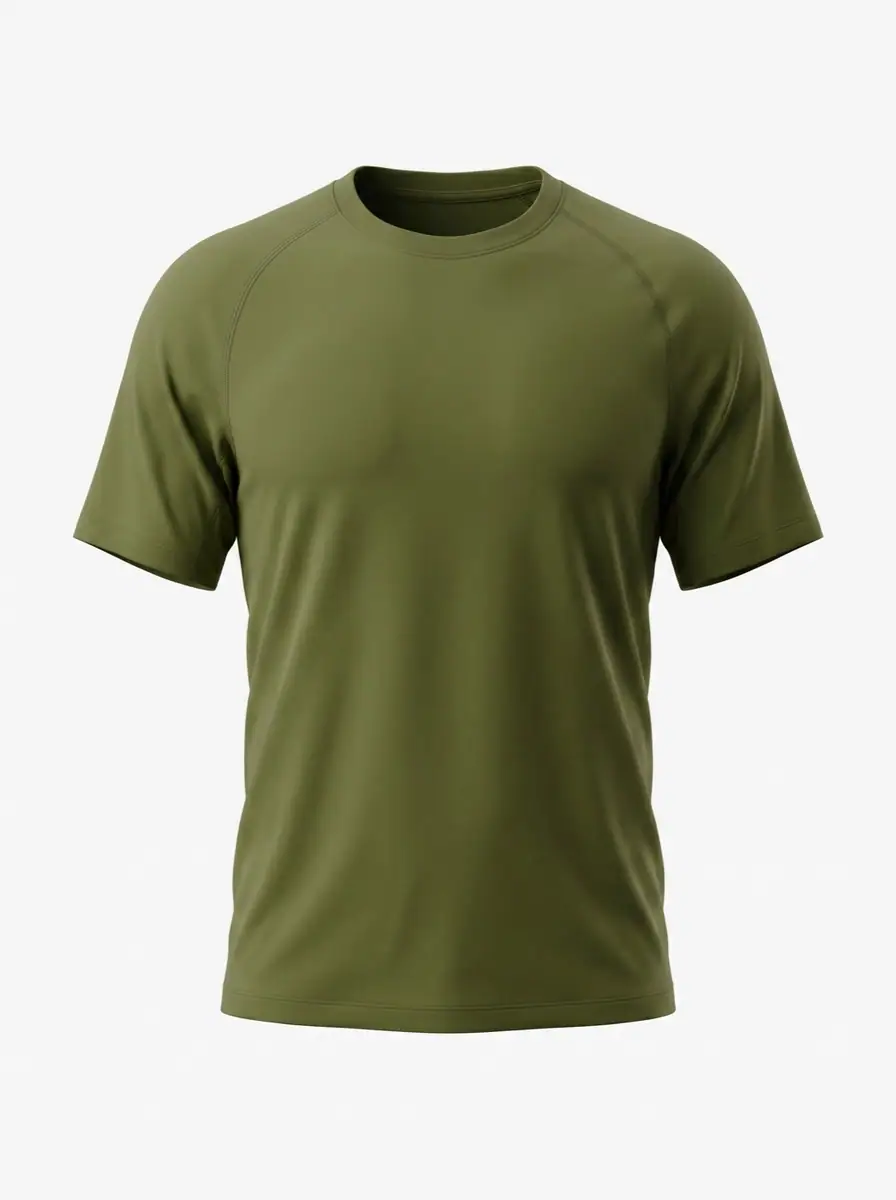
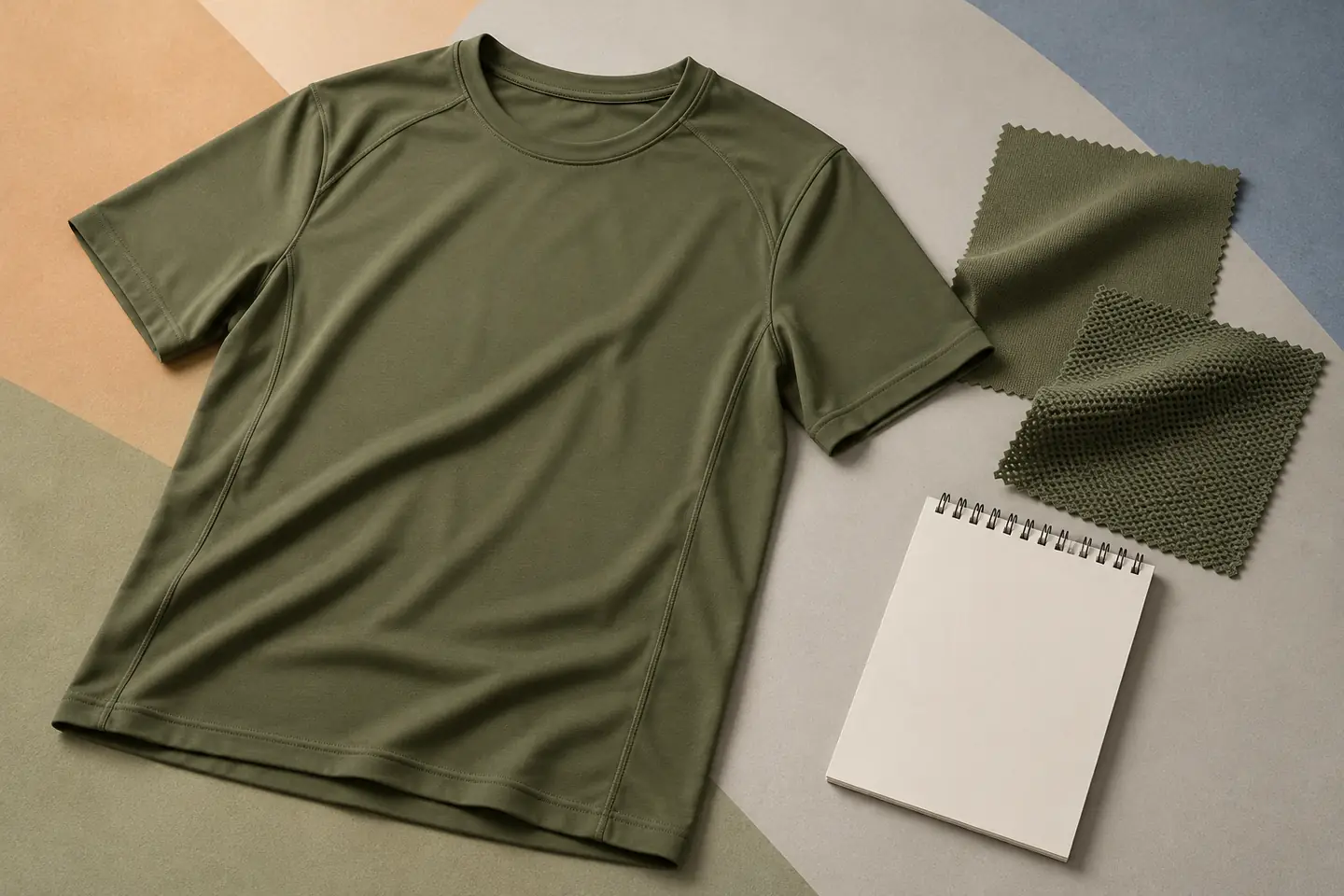
Specify PCM response and moisture management as two separate questions. Neither a cooling label nor a quick-dry swatch proves comfort for a particular wearer, climate or duty cycle. Define the use case, agree methods and acceptance criteria, then compare the finished garment before and after the agreed care process. The image is an AI concept, not a product test or factory photograph.
Separate temperature regulation from sweat handling
PCM thermal response and moisture transport address different buyer questions; ask for evidence for each.
State whether the priority is perceived cooling, heat buffering, sweat spreading, drying or next-to-skin comfort. A claim about one function cannot stand in for the other.
Request the proposed fabric composition and construction, where PCM is incorporated, and the project-specific method used to evaluate each claimed function. Do not infer a temperature drop or duration from composition alone.
Describe the actual hot-climate duty cycle
The same shirt may be judged differently during active training, stationary duty or use under equipment.
Give the destination climate, activity level, wearing time, outer layers, body-armor or pack contact, size range and care routine. Identify the positions where airflow, sweat accumulation or seam pressure may matter.
Prioritize requirements before sampling. If two uses conflict, request separate sample options or a documented trade-off instead of a universal performance promise.
Validate material and finished garment
Agree measurable methods and a wearer review before calling a sample approved.
Compare representative material samples under the same conditioning and test conditions; specify specimen state, wash state, endpoint and decision rule. Ask whether external laboratory evidence is needed for the destination market.
Review fit, seam placement, movement, hand feel and comfort on the sewn sample in the intended layer system. T1-FC001 is a catalog direction, not a published guarantee of cooling magnitude, duration or test rating.
Freeze the brief and request a project quotation
The agreed material, construction and evidence must stay connected to the approved sample.
Keep the versioned brief, fabric identification, test plan, sample photos, comments, deviations and approval owner. Reassess any change in yarn, finish, supplier, pattern or care instructions.
Send the use case, quantity, sizes, colors, branding, packaging, market and required evidence with your RFQ. MOQ, price, lead time and any certification requirement need project-specific confirmation.
Buyer brief checklist
- Wearer and hot-climate duty cycle
- PCM claim and evidence requested
- Moisture-handling claim and evidence requested
- Fabric composition and construction
- Test method, conditioning and wash state
- Finished-garment fit and seam review
- Approved sample and revision owner
- Sizes, quantity, branding and destination market
Review fabric and garment quality control ↗
Review OEM sample development ↗
Email your cooling-apparel brief or start on WhatsApp ↗