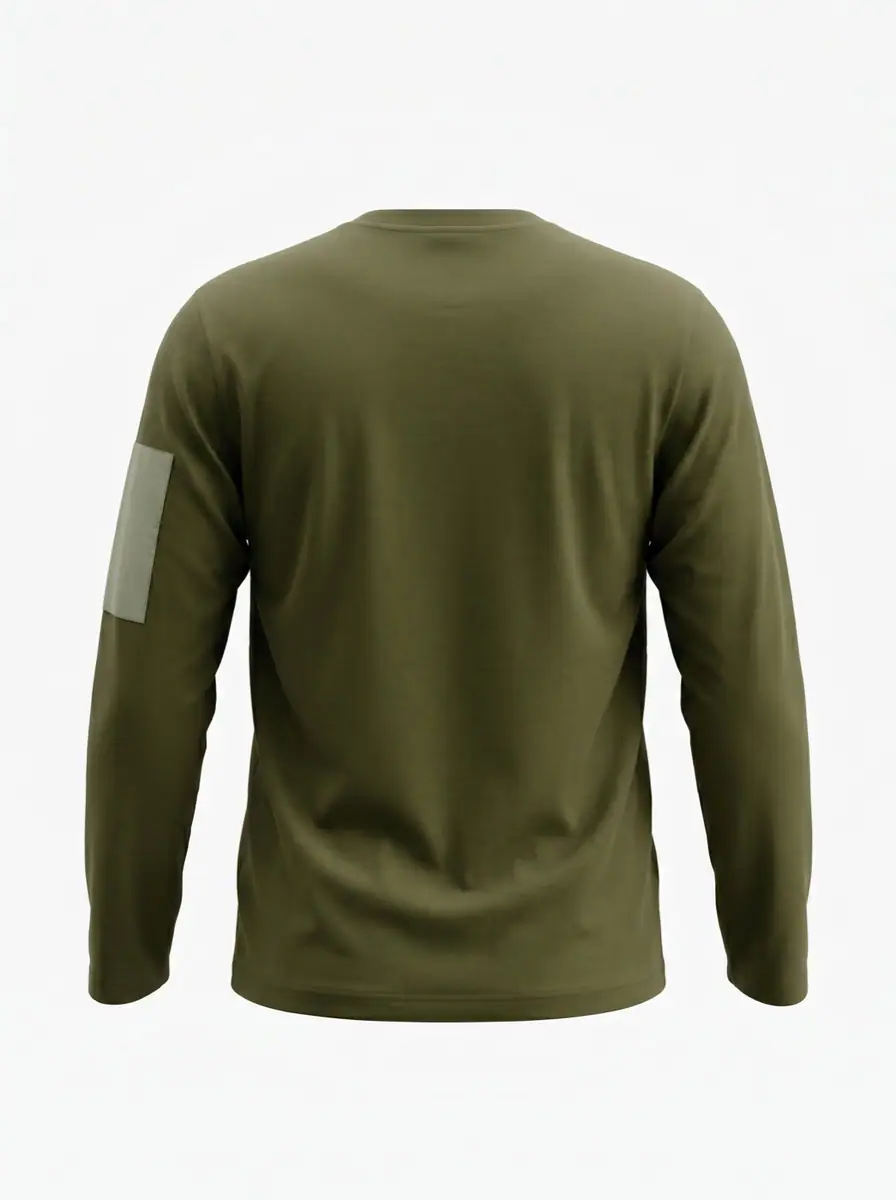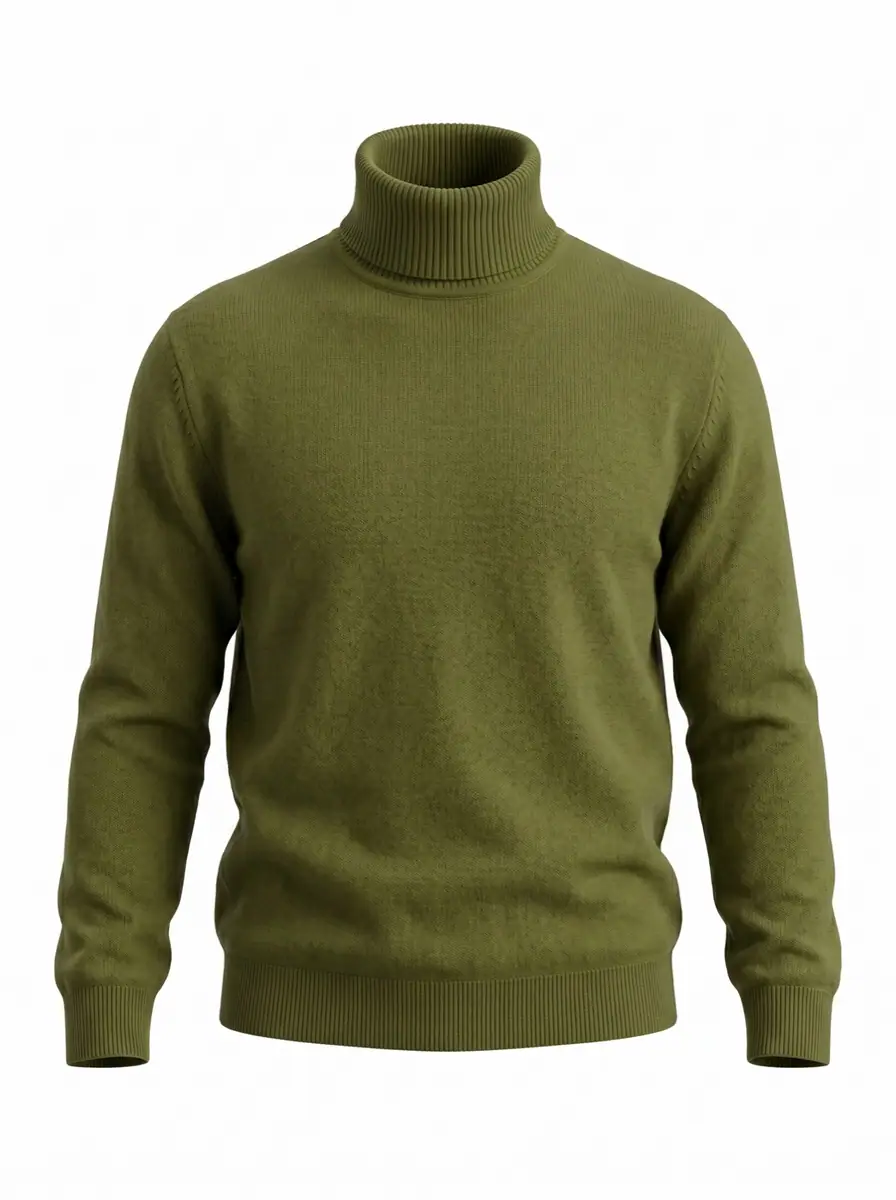
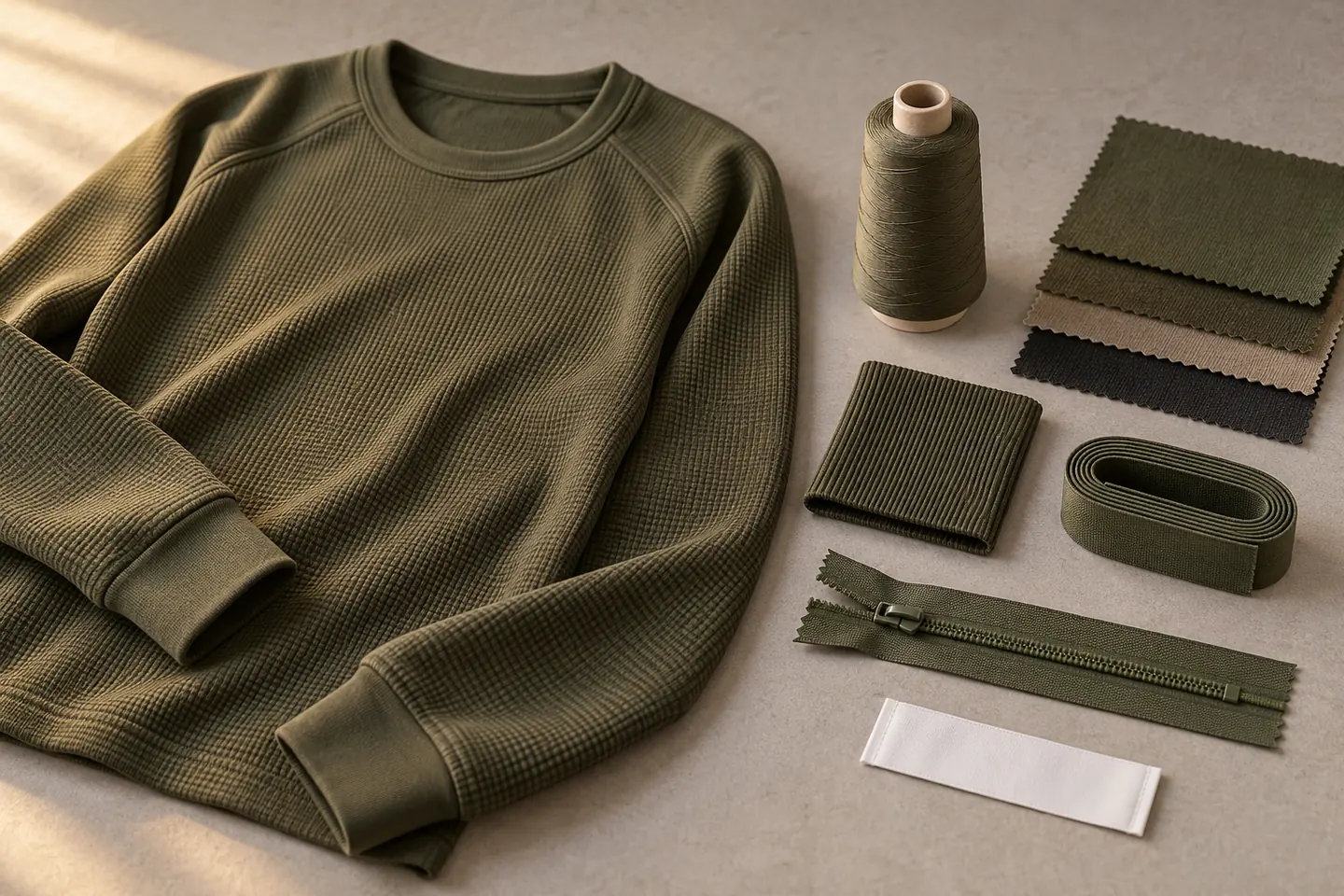
Treat trims as specified product components, not incidental purchasing items. Before bulk approval, map each component to the garment location, material and performance requirement; review it on a buyer-approved sample; and record how substitutions will be controlled. The image is an AI concept, not a catalog product, factory record or test result. A zipper is relevant only where the buyer's design calls for one.
Define component scope by garment
The RFQ should name each trim, its location and the job it must perform.
List sewing thread, rib neck or cuff, elastic, closure where applicable, labels and attachment methods alongside the main fabric and size range. A plain thermal shirt and a zip-neck variant do not share the same bill of materials.
State the wearer, climate, care process, destination market and any buyer-defined appearance or function criteria. Do not infer compliance from a generic trim name.
Approve components on the actual sample
A swatch or supplier card cannot replace evaluation in the finished garment.
Check cuff recovery, seam and thread appearance, elastic pressure, closure operation if specified, and label position on representative sizes. Review fit and comfort with intended outer layers or equipment.
Record the approved supplier reference, color, size or gauge, placement and sample revision for each item. Confirm where an exact match matters and where an agreed alternative may be reviewed.
Agree evidence and substitution rules
Ask what evidence is needed for the actual requirement, then define who approves changes.
Set buyer-specific methods and acceptance criteria for relevant properties such as attachment strength, wash appearance, color compatibility or closure function. An internal inspection does not replace an external report if the tender or market requires one.
If thread, elastic, zipper, label stock or supplier changes, identify what must be rechecked and who signs the revised sample or evidence before release.
Release a controlled bill of materials
Link the approved component list to inspection and repeat-order control.
Keep the sample, bill of materials, revision, approved drawings or placement images, available reports and unresolved items together. Tell the inspection team which fabric and trim identifiers to verify at incoming and final checkpoints.
Share your application, quantity, destination, size range and component priorities to request a sample and quotation route. MOQ, price and timing are confirmed for the specific project.
Buyer brief checklist
- Product type, wearer, climate and intended care
- Main fabric and every trim or closure actually required
- Location, construction and color reference for each component
- Representative sample sizes and outer-layer interaction
- Buyer-defined test methods, acceptance criteria and responsible party
- Approved supplier or material reference and revision
- Substitution and re-approval decision owner
- Final bill of materials, inspection points and open items
Review incoming fabric and garment inspection ↗
Review the OEM sample-development route ↗
Email your component brief or start on WhatsApp ↗