
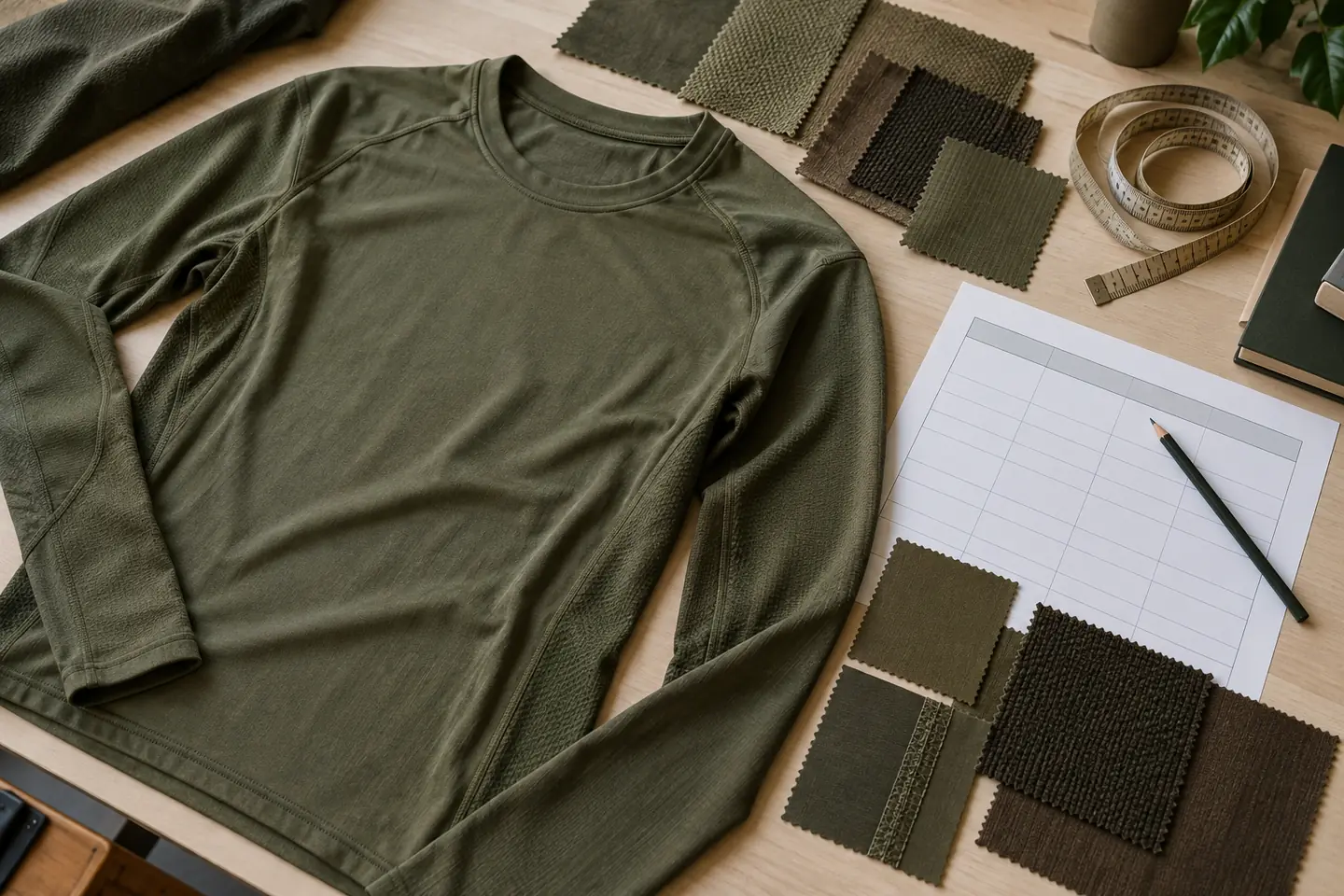
A tender sample is not simply a good-looking showroom garment. Before sampling, the buyer and manufacturer should connect each applicable tender clause to a product decision, an owner, an approval reference and the evidence required for that exact project. This reduces avoidable gaps without implying that any supplier can guarantee a bid award. The photograph is an AI-generated planning concept, not evidence of a completed tender or tested product.
Translate clauses into a controlled requirement matrix
Give each applicable requirement a traceable row before a pattern or sample is approved.
Record the clause reference, mandatory or optional status, intended use, garment feature, proposed material or construction, acceptance method, evidence owner and current status. Separate stated facts from assumptions; mark missing drawings, unclear test methods, conflicting deadlines and buyer clarifications openly.
Review the matrix with the buyer or tender integrator before sampling. A photograph, sample or report should answer a particular requirement rather than act as a general promise. Keep revisions dated so the team knows which tender version controls the work.
Choose a representative garment and material route
The sample should represent the offered configuration, not just an attractive fabric or convenient size.
Agree the garment category, size set, layering context, colour reference, trims, seam and reinforcement locations, labels, branding and packing route. Identify any alternative material or component explicitly and obtain a decision before presenting it as compliant.
For bulk production, connect the approved material reference to incoming-fabric control and construction checkpoints. Leading Protective states that incoming fabric is inspected before release and uses an in-house textile laboratory to support material review; project-specific methods and acceptance limits still need to be agreed.
Match evidence to the exact requirement and sample
A tender evidence pack is useful only when its scope, identity and method match the offered item.
For each test or declaration, record the sample identity, material or garment version, method, laboratory or issuing party, date, result and tender clause it addresses. Determine whether the buyer requires independent testing, an accredited report, inspection records, a physical reference or a signed declaration.
Do not present a generic certificate, an unrelated fabric report or an in-house screening result as proof of a different finished garment. If testing is pending, mark it pending and agree who commissions it, when the sample is taken and how a failed result changes the offer.
Freeze approval and hand over changes to production
The approved sample, matrix and production specification must describe the same product.
Before release, review fit and movement, critical measurements, construction, appearance, labelling, packing and the required evidence pack. Record approvals and open items in a controlled sample record; retain clear photographs or physical references where the buyer permits.
Handover should include the approved bill of materials, pattern and size chart, seam references, inspection checkpoints and a change log. Any substitution after approval needs a documented buyer decision and, where necessary, new evidence. Quantity, lead time and commercial terms are confirmed for the specific enquiry, not assumed from a generic guide.
Buyer brief checklist
- Tender version, clause references and submission deadline
- Mandatory versus optional requirements and unresolved questions
- Intended user, climate, garment category and layering context
- Approved material, colour, trims, size set and construction references
- Test method, sample identity, issuing party and acceptance criteria
- Buyer-required evidence, independent testing and document ownership
- Sample approval record, permitted deviations and change control
- Bulk inspection, labelling, packing and project-specific commercial brief
See our fabric and garment quality-control process ↗
Products connected to this solution
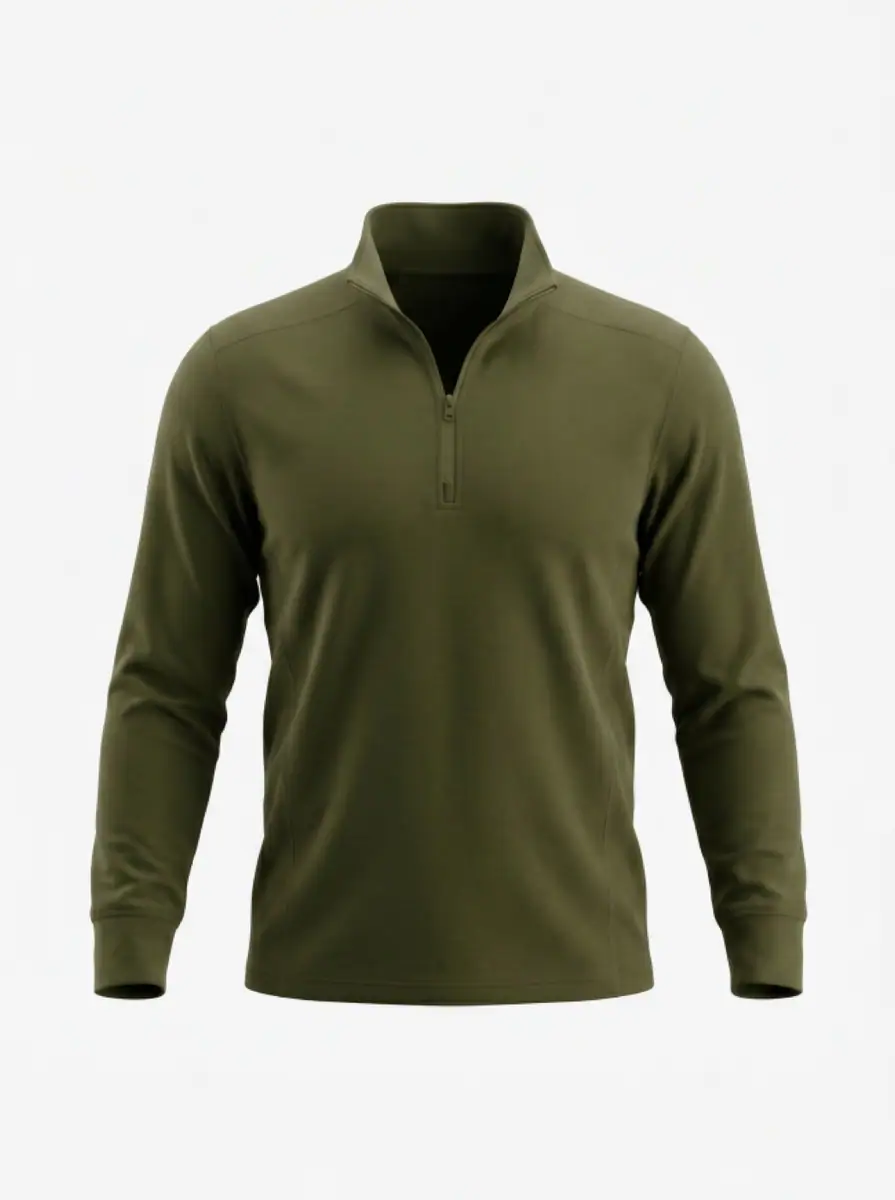 T1-FW001
Military Thermal Underwear Set
A base-layer reference for reviewing a coordinated top-and-bottom specification, fit and layering requirements.
View product details ↗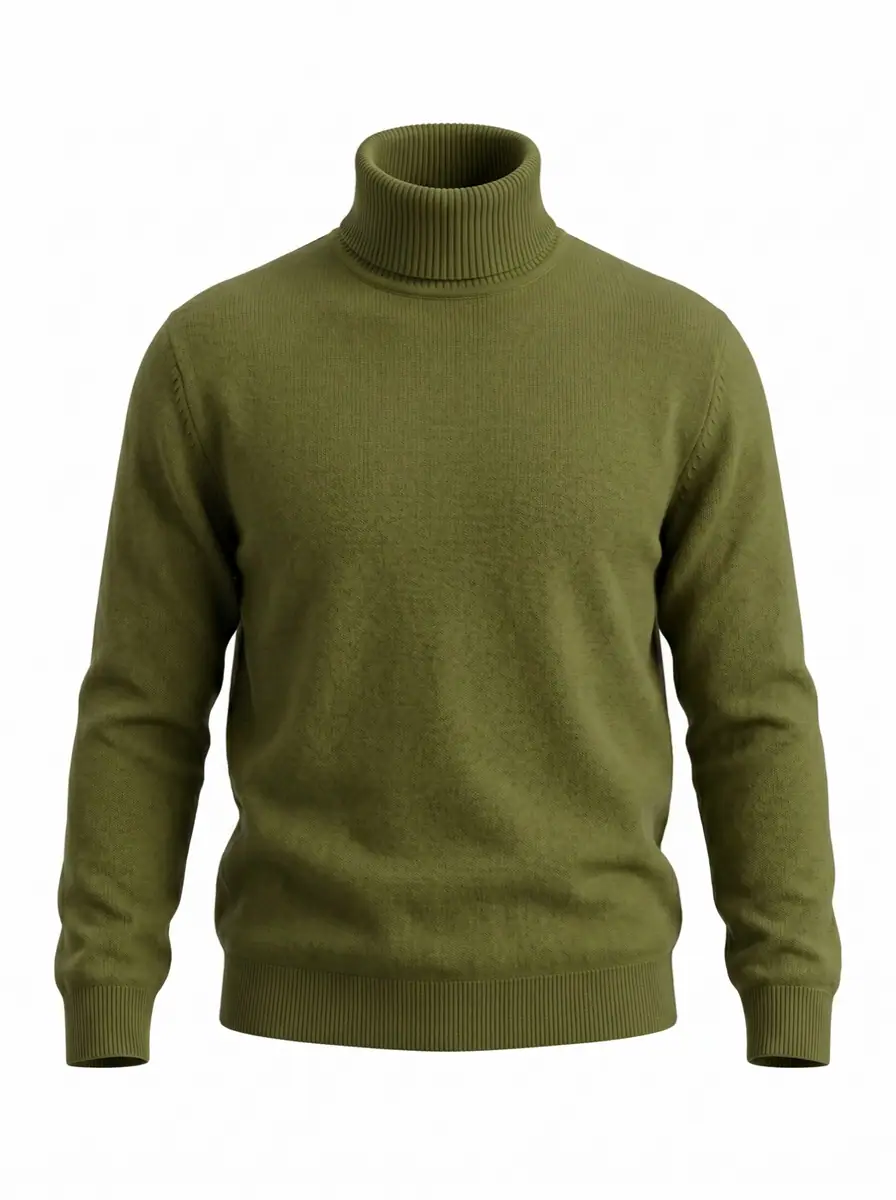 T1-FW004
Training Turtleneck Sweater
A unisex training-layer reference for checking collar, knit, sizing, branding and construction against a buyer brief.
View product details ↗