
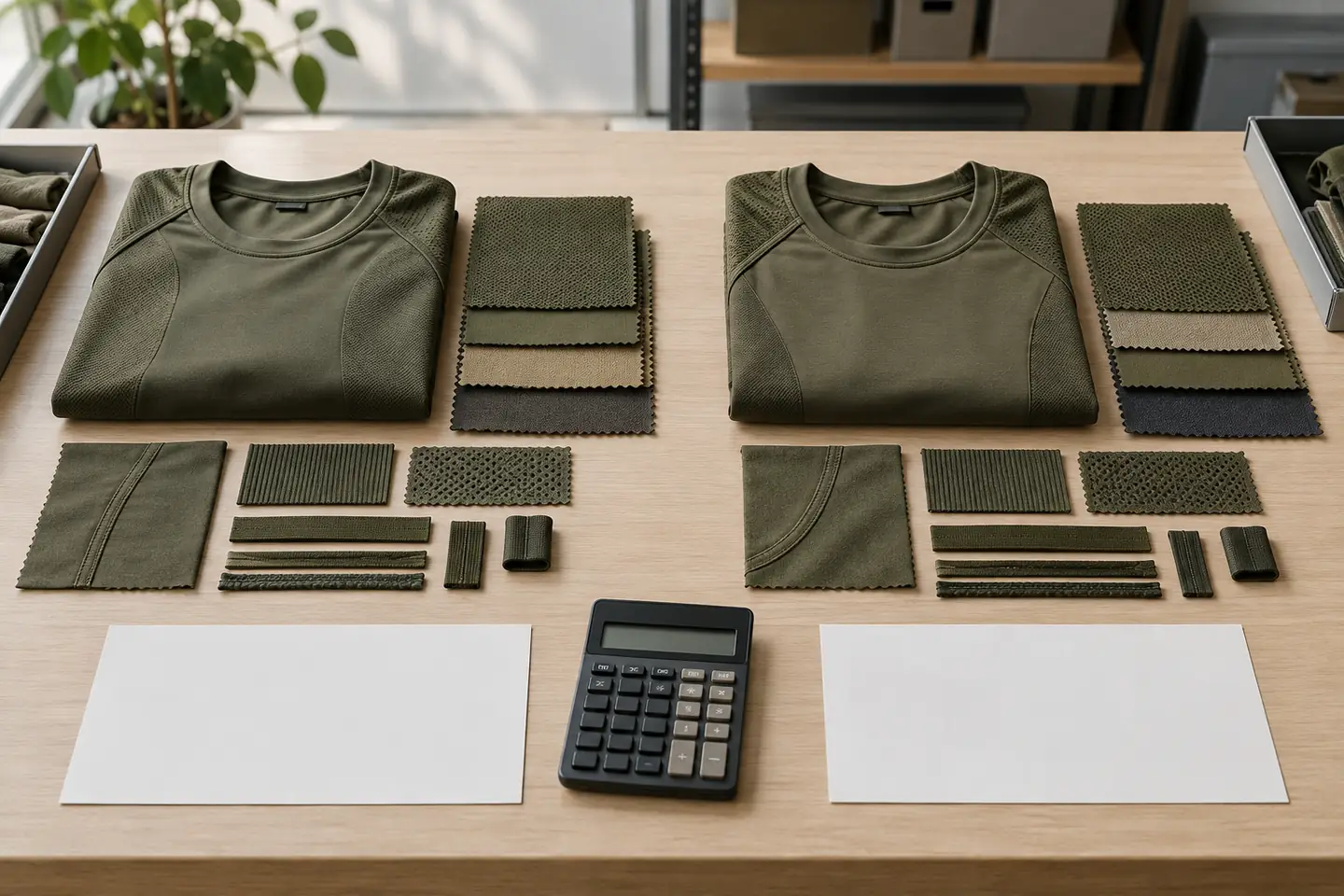
Compare military garment OEM quotations only after every supplier has answered the same product brief and commercial basis. A lower unit price is not comparable if fabric, sample revisions, inspection, packing or shipment terms differ. Normalize those items, show exclusions and open decisions, then request a revised quote. The image is an AI-generated concept, not a real customer quotation, product approval or factory record.
Freeze one RFQ comparison basis
Send each supplier the same revision of the product and order brief.
Define the intended user, climate, garment form, fabric and trim direction, size range, colors, branding, estimated quantity, destination and requested timing. Attach drawings or a reference sample description where available.
Keep requested alternatives on separate lines. A substituted fabric, different size curve or simplified construction can change cost and performance, so it must not be compared as if it were the same offer.
Separate price inclusions and exclusions
Compare the total scope behind the unit price before comparing numbers.
Ask whether pattern work, development and pre-production samples, revisions, buyer-defined tests, labels, packing, tooling and shipment preparation are included. Record currency, quotation validity, payment basis and the named Incoterm with its place.
State the quantity and size/color split used for each quote. If a material minimum, component choice or freight condition changes the price, ask for a clearly identified alternative instead of assuming the first figure applies.
Compare quality evidence and approval gates
A comparable offer identifies what will be inspected, by whom and against which approved reference.
Request the incoming-fabric check, relevant lab or third-party test scope, sample approval, in-process workmanship points, finished-garment inspection and records to be supplied. Match methods and acceptance criteria to the actual project.
Do not treat an in-house screening result as independent certification, or a fabric report as proof of the finished garment. Ask which evidence is available now, which requires project testing and which remains unverified.
Control sample changes before order
The final quote should refer to the same revision as the approved sample and production specification.
Track changes to material, trim, pattern, seam, label and packing with an owner and approval status. Request a revised quotation when a change affects the cost, test plan, minimum quantity or delivery route.
Before selecting a partner, agree the sample sequence, decision dates, open questions, quality checkpoints and handover documents. Leading Protective can review a buyer brief and propose a project-specific development route; terms are confirmed in the actual quotation.
Buyer brief checklist
- One dated RFQ and drawing or reference revision for all suppliers
- Same garment construction, materials, trims, colors and size range
- Quantity and size/color split used for each quoted line
- Sample, revision, tooling, testing and packing inclusions
- Currency, validity, payment basis and named Incoterm/place
- Incoming fabric, sewing and final inspection scope
- Evidence available now versus project-specific or pending
- Change approval, sample milestones and production handover
Review our OEM development route ↗
Review fabric and garment quality control ↗
Email your RFQ or start on WhatsApp ↗
Products connected to this solution
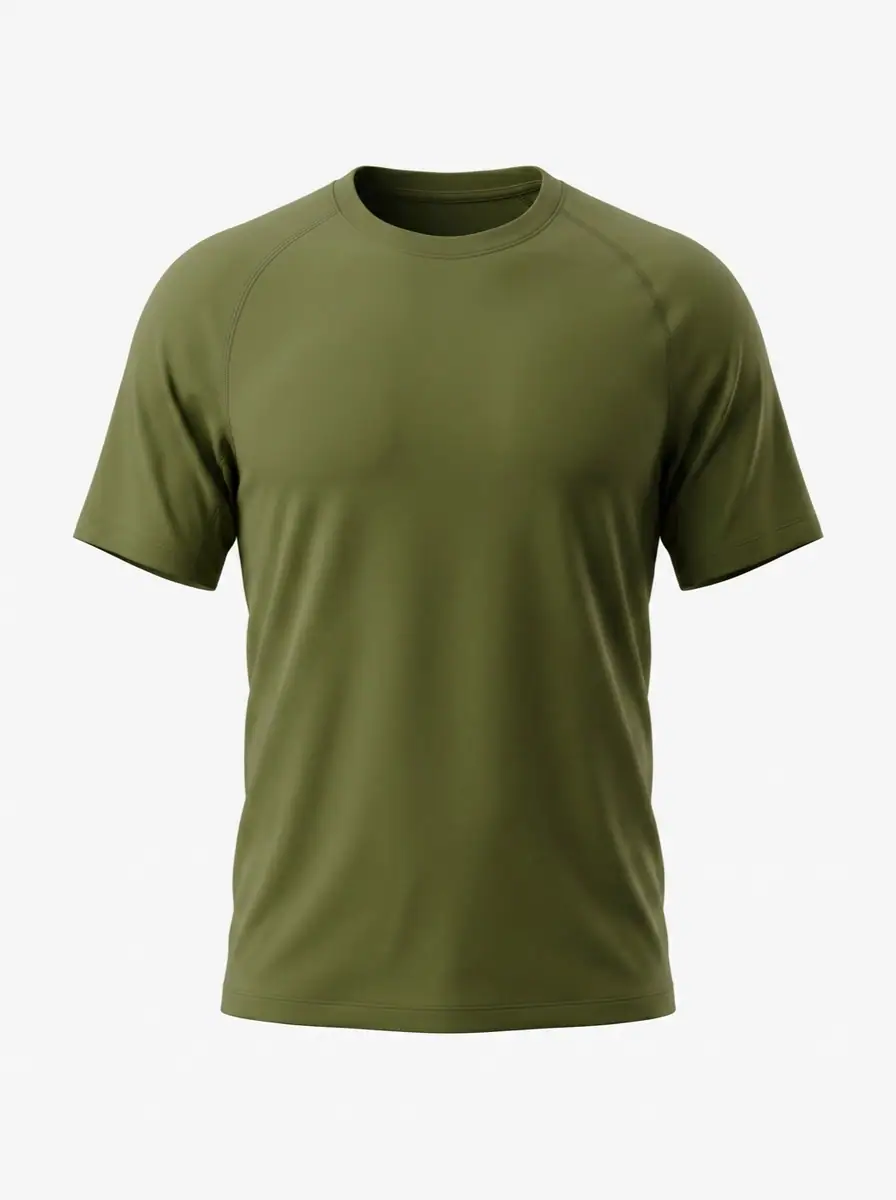 T1-FC001
Military Cooling T-Shirt
A cooling base-layer reference for comparing fabric, construction, size and quality assumptions on the same RFQ.
View product details ↗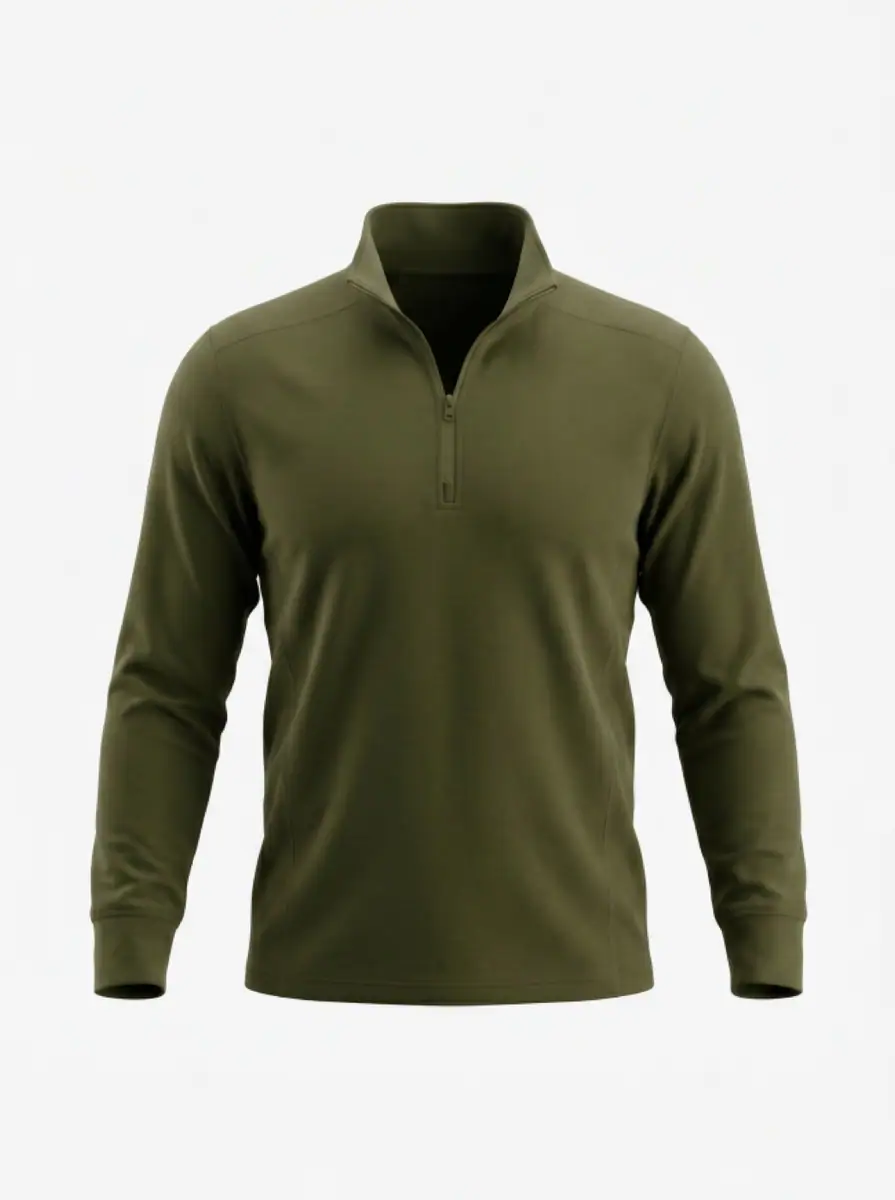 T1-FW001
Military Thermal Underwear Set
A thermal base-layer reference for aligning material, sample, care, packing and inspection scope before quotation.
View product details ↗