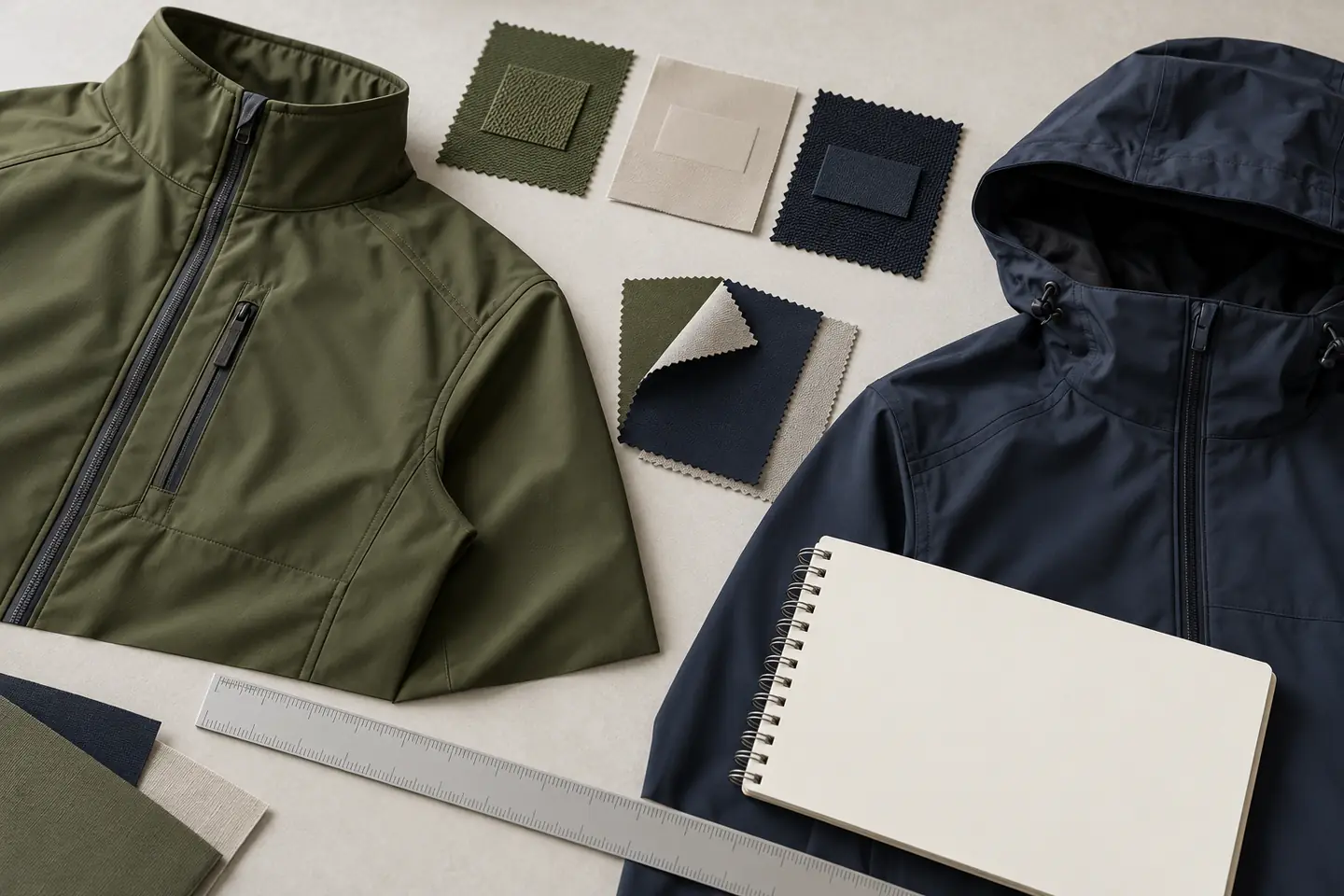
Approve branding on the finished garment, not from artwork alone. Embroidery, transfer and sewn labels can affect different fabrics and wear locations differently. Agree placement, dimensions, appearance, care conditions and a retained reference before production. The illustration is an AI concept, not a photographed factory sample or durability result.
Define each mark and its location
A useful brief identifies every logo, label or identification mark by version, size, colour and placement.
Provide approved artwork and placement drawings for each garment size, including the measurement reference point. Clarify which marks are permanent, removable or buyer-supplied. Do not use a generic front-view mockup as the only approval evidence.
Confirm that the buyer has authority to use supplied artwork and that destination-market identification requirements are handled in the project specification.
Select a method for the actual material
Compare embroidery, transfer or sewn-label options on the proposed fabric and garment construction.
Review stretch, hand feel, reverse-side comfort, seam clearance and color contrast. A method suitable for a heavier outer layer may not suit the next-to-skin T1-FC001 direction; T1-FW003 has different construction and needs its own sample.
Agree the proposed application method, specimen preparation and any required wash or abrasion evaluation. Do not claim universal durability from an undecorated fabric test.
Approve placement on a worn and washed sample
Position and appearance should be checked on the sewn garment in its intended use.
Check visibility under equipment or outer layers, movement, edge lifting, distortion and skin contact. Photograph the same marked positions before and after the agreed care process, using a retained sample and written acceptance criteria.
If a tender requires special insignia or marking rules, ask the buyer to supply the authoritative specification. Do not infer compliance from a similar past style.
Lock the reference and request a quote
The approved artwork, method, position and sample must be revision-controlled together.
Record the garment style, fabric revision, artwork file, color reference, placement measurements, application settings, inspection points and decision owner. Recheck a change in fabric, supplier, artwork or method before repeat orders.
For an RFQ, send the destination market, wearer, quantities, size breakdown, artwork rights, care requirement, packing and evidence needed. MOQ, price, timing and any certification are confirmed per project.
Buyer brief checklist
- Approved artwork and usage authority
- Garment and fabric revision
- Mark type and method
- Size, colour and placement reference
- Stretch, comfort and equipment clearance
- Wash or wear review method
- Retained sample and approval owner
- Quantities, market and packing brief
Review garment and fabric quality control ↗
Review OEM sample development ↗
Email your branding brief or start on WhatsApp ↗
Products connected to this solution
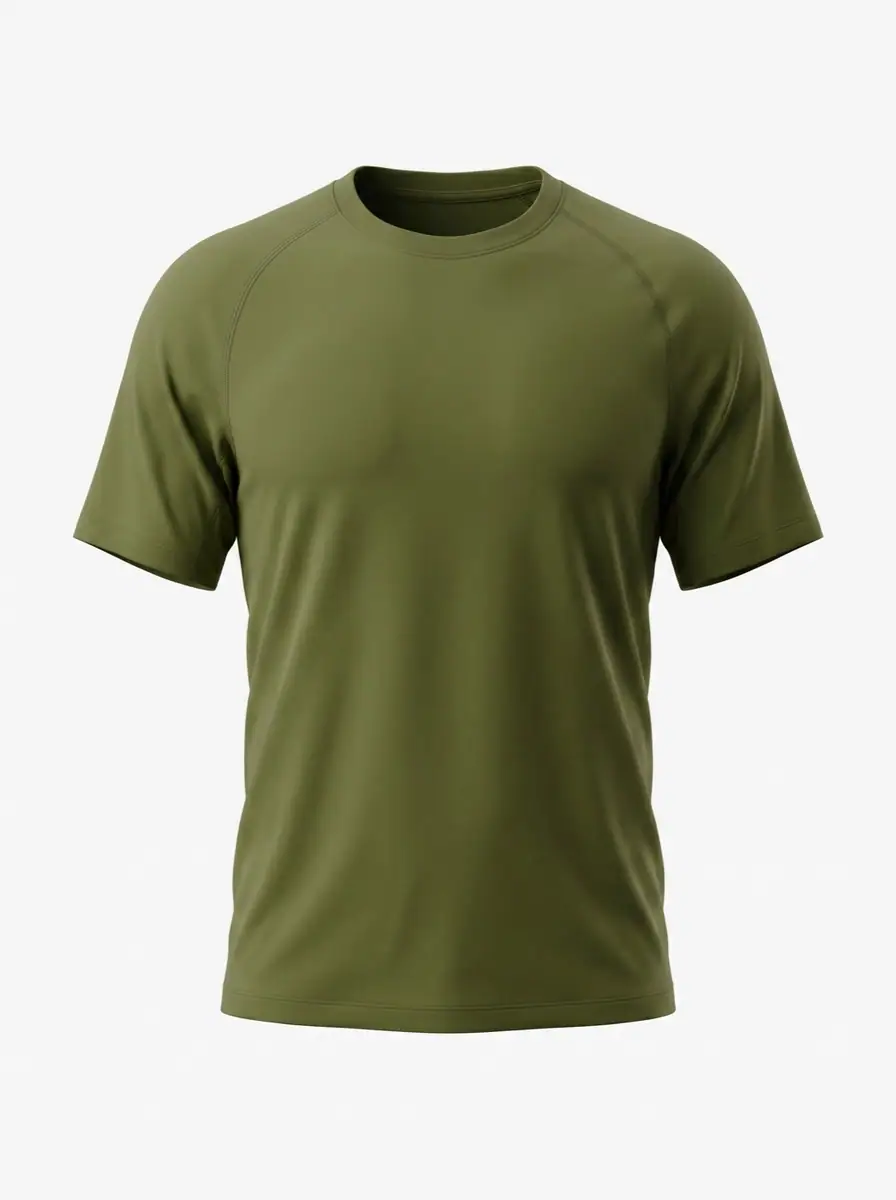 T1-FC001
Military Cooling T-Shirt
Cooling base-layer reference for checking marking comfort, stretch and wash requirements on the intended material.
View product details ↗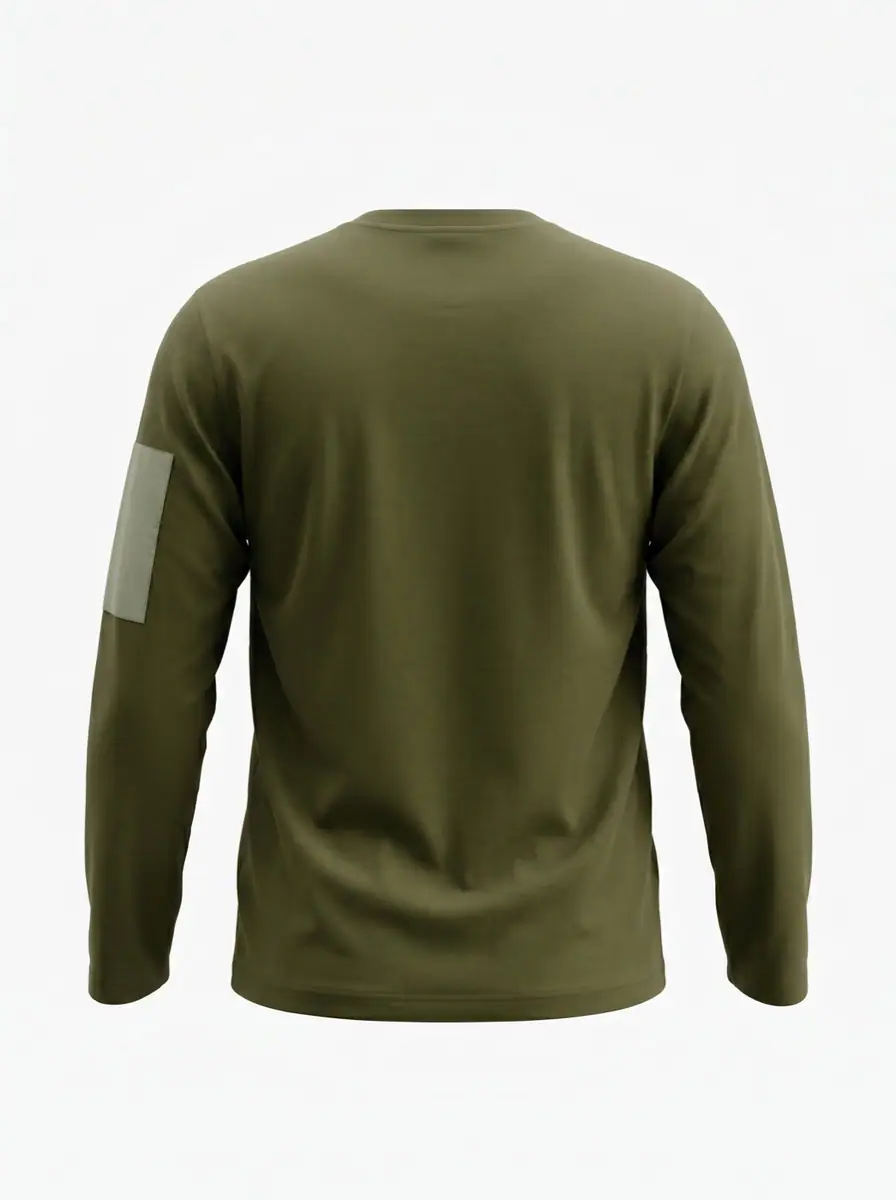 T1-FW003
Military Long Sleeve T-Shirt
Separate long-sleeve reference for comparing placement and construction before approving a branding method.
View product details ↗