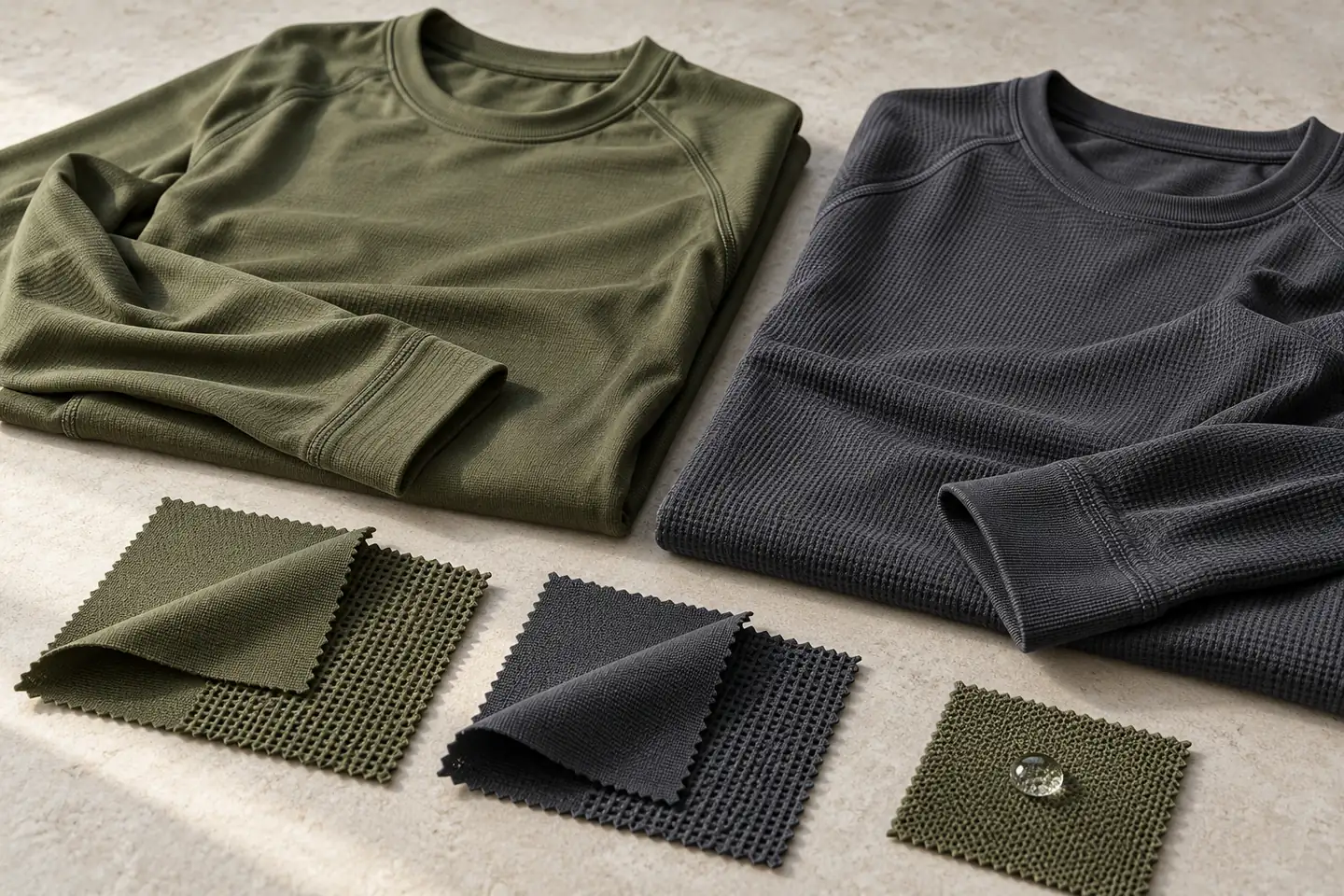
Validate a military base layer for moisture management against the buyer's actual duty cycle, layering system and care process—not a single fabric adjective. Agree the method and acceptance criteria before sampling, compare the same fabric and garment revisions, then confirm performance after the specified care cycles. The image is an AI-generated concept, not a test result, catalog product or factory record.
Define use and layering conditions
Start with the wearer, activity and outer layers rather than a generic 'quick-dry' claim.
Record active and static periods, climate, skin-contact preference, insulation or shell layers, equipment contact points and expected change or drying opportunities. These conditions determine which moisture behavior matters to the buyer.
A fabric that feels comfortable alone may behave differently beneath an insulating layer or protective equipment. Identify the actual layer stack and representative size for sample assessment.
Choose project-specific evidence
Specify the moisture property, method, conditioning and acceptance threshold in the RFQ.
Decide whether the project needs evidence for liquid transport, absorption, drying, vapor transfer or a combination. Ask for the buyer-approved test method, specimen orientation, wash state, laboratory scope and reporting format before comparing offers.
Do not treat a drop-on-fabric demonstration, a PCM claim or an internal screening result as proof of finished-garment performance. Separate evidence already available from tests still required for this program.
Test the finished garment in context
Use the approved size and layer stack to check fit, seams and wear conditions alongside fabric data.
Inspect skin-contact seams, body fit, high-perspiration zones, cuff and neck construction, and interaction with outer garments or equipment. Record where moisture accumulates during the buyer-defined use trial.
Compare samples made with the same fabric revision and construction. A lab swatch result alone cannot confirm that seam placement, fit and layered wear will work for the intended user.
Control fabric and care revisions
Approval should identify the fabric lot, garment revision and care state that were actually evaluated.
Link incoming-fabric identification and inspection records to the approved sample and finished-garment check. If yarn, finish, knit structure or supplier changes, decide what must be retested before bulk approval.
Confirm care instructions, the agreed laundering sequence and any repeat-test requirements with the buyer. Leading Protective can review a project brief and propose a sample and inspection route; test scope and commercial terms are confirmed for the actual order.
Buyer brief checklist
- Wearer, climate, active and static duty periods
- Actual layer stack and equipment contact points
- Property to measure and buyer-approved method
- Specimen direction, conditioning and care state
- Acceptance criteria and report format agreed before sampling
- Finished-garment fit, seams and wear-trial observations
- Fabric identification, sample revision and change approvals
- Open tests, responsible party and bulk approval gate
Review fabric inspection and in-house testing ↗
Review our OEM sample-development route ↗
Email your base-layer brief or start on WhatsApp ↗
Products connected to this solution
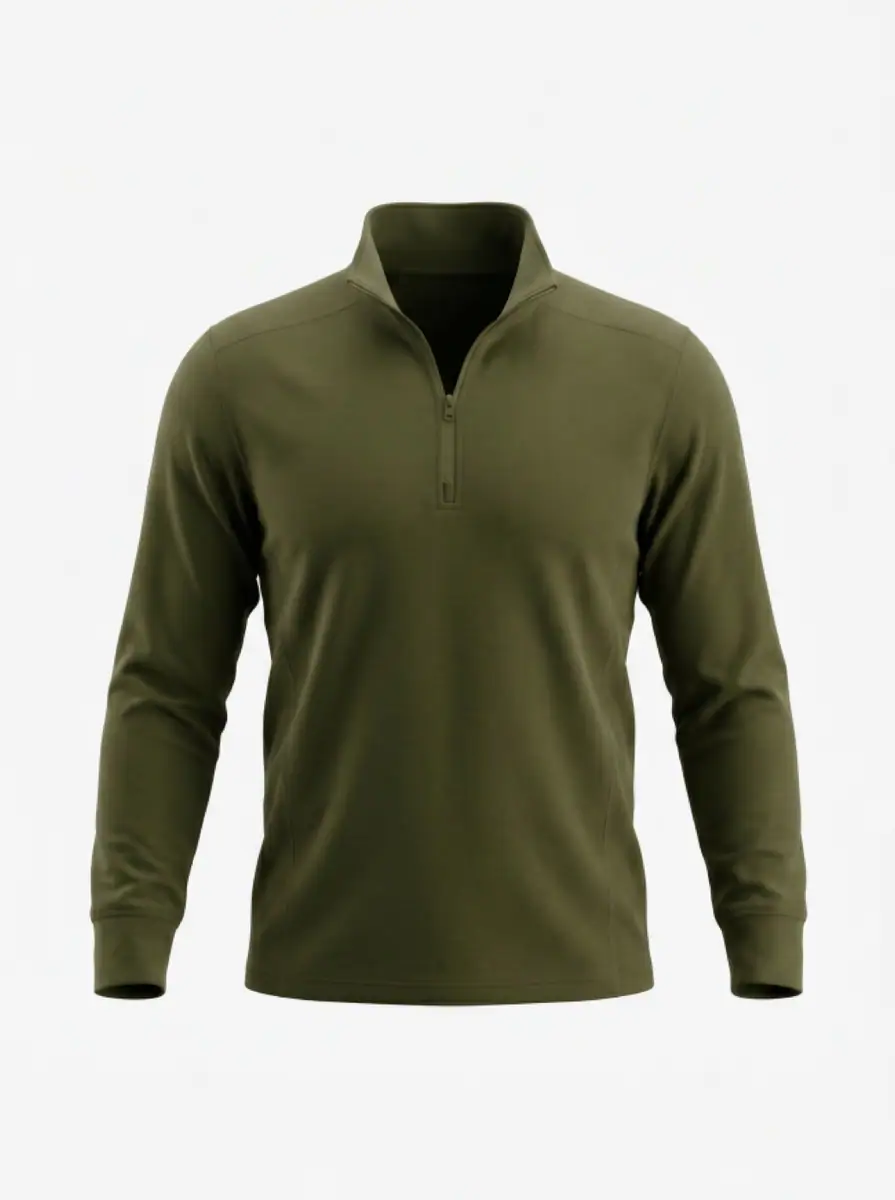 T1-FW001
Military Thermal Underwear Set
Thermal base-layer reference for discussing fabric, fit, layering and project-specific moisture validation.
View product details ↗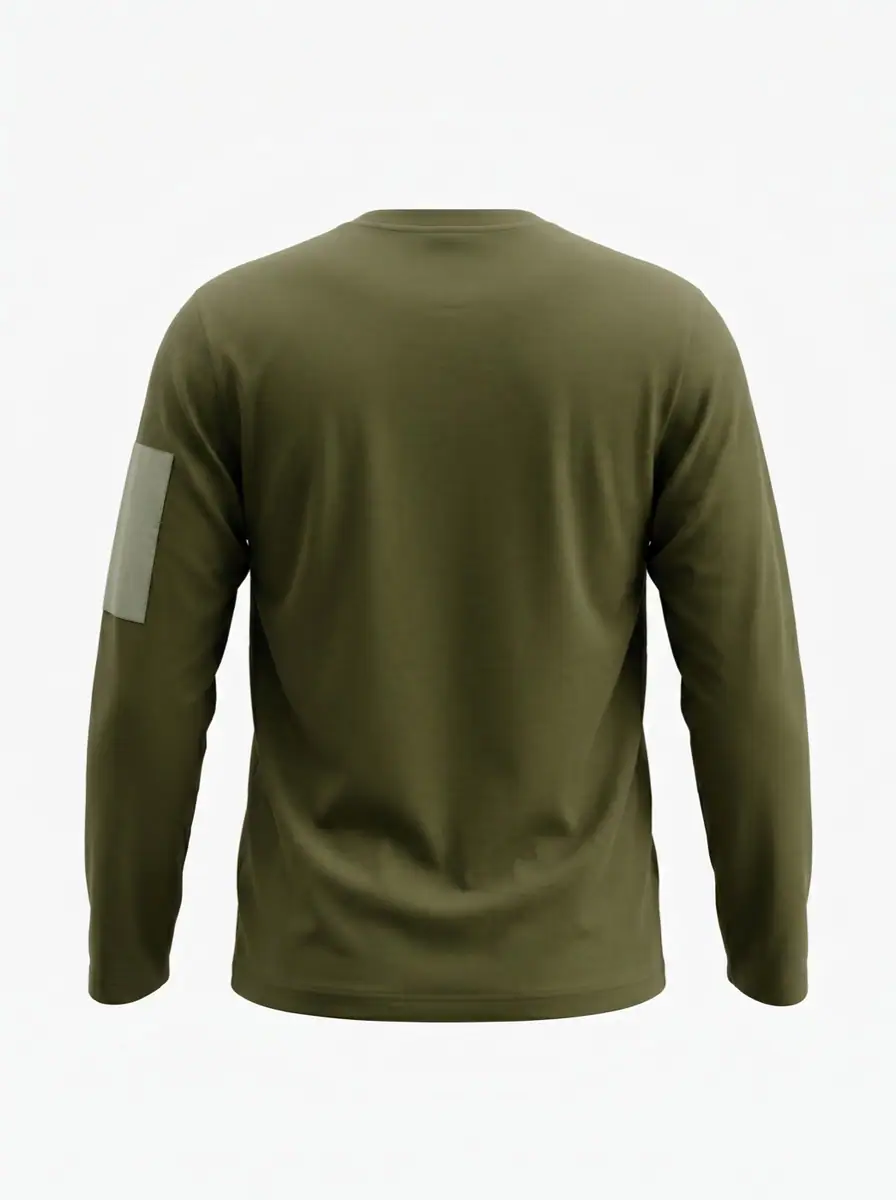 T1-FW003
Military Long-Sleeve T-Shirt
Long-sleeve reference for comparing skin-contact construction and moisture requirements in a defined use case.
View product details ↗