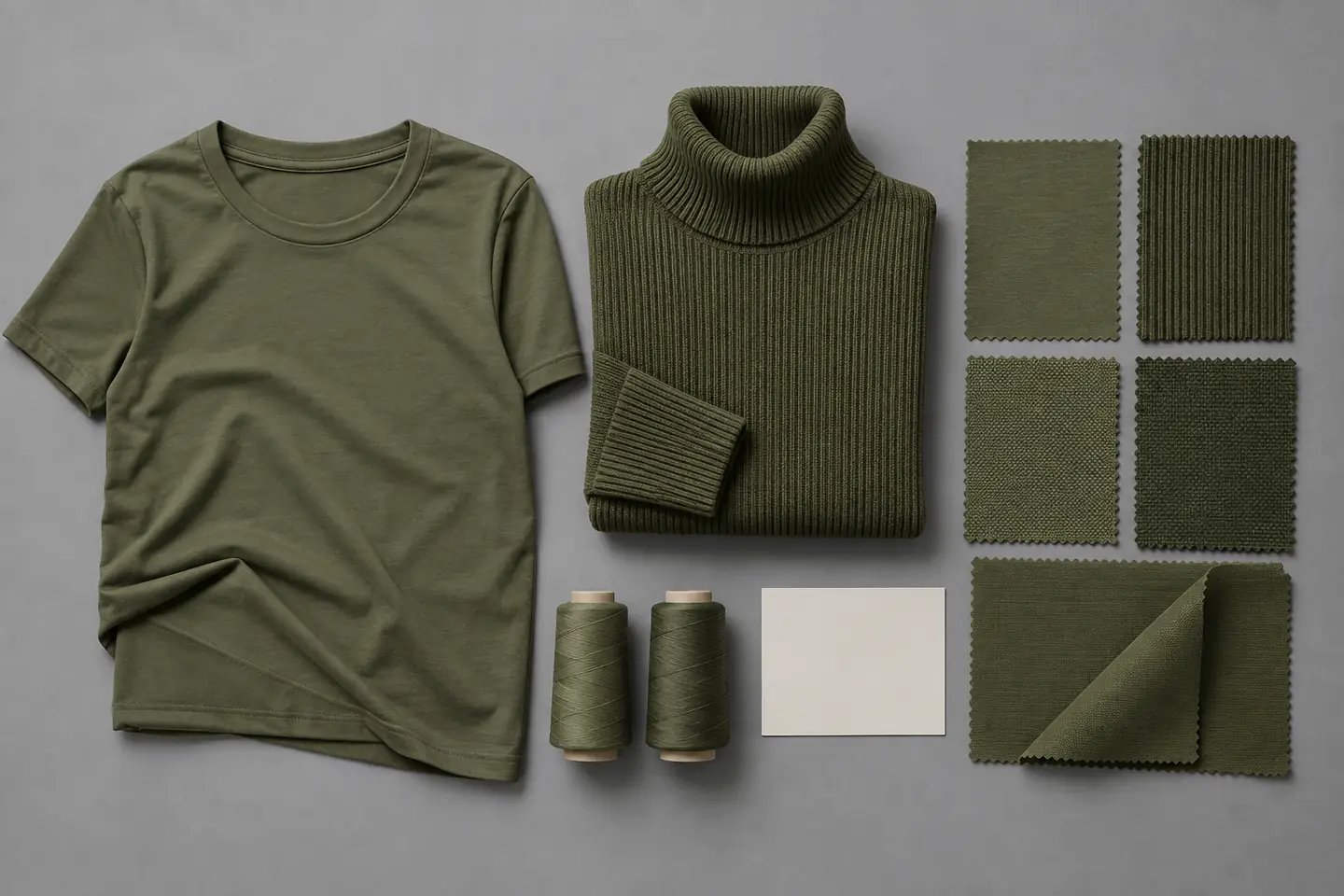
For a military apparel OEM order, approve a physical colour reference and a written comparison procedure before bulk materials are released. An olive colour name or screen photograph is not a complete approval standard. Define what must match across fabrics and trims, how differences will be assessed, and how future orders will refer back to the same decision. This guide concerns visible colour only: it does not establish camouflage or infrared performance. The image is an AI-generated concept, not a supplied product or inspection record.
What should a buyer send as the colour target?
Send an identified physical reference and specify which item takes priority when references disagree.
State whether the target is an approved garment, a fabric swatch or a named colour-system reference. Record its identifier, approval date, material and owner; keep a protected counterpart with the buyer and supplier. Use photographs to communicate direction, not as the sole release reference.
List the requested products, visible layer combinations, destination market, quantity by colour and replenishment plan. Ask the supplier to confirm which materials and dyeing routes are feasible before promising a cross-fabric match; MOQ, sample cost, price and timing remain project-specific.
Can a cooling T-shirt and knitted sweater use one colour approval?
They can share a target, but each material and visible trim needs its own approved reference and a kit-level review.
The T1-FC001 cooling T-shirt, T1-FW001 thermal underwear set and T1-FW004 unisex turtleneck are different product constructions. Review the actual proposed fabric or yarn, rib components, thread, labels and any exposed closure together; do not approve the whole kit from one fabric swatch.
For a first colour development, request representative dyed fabric or yarn samples before the finished pre-production sample. Specify which differences between layers are acceptable, which components must closely coordinate, and whether the buyer will accept separate material-specific standards.
How should visible colour differences be accepted?
Agree the comparison method, viewing conditions and acceptance limits before reviewing samples; do not invent a universal tolerance.
Document the selected light sources, neutral background, specimen positioning and preparation, reviewer responsibility and approval record. If instrumental colour measurement is required, agree the equipment settings, calculation and limit separately. AATCC publishes a visual colour-difference evaluation procedure; the applicable current method and complete procedure must be agreed, not assumed from an online summary.
Separate initial shade matching from colourfastness after washing, rubbing, perspiration or light exposure. Confirm only the relevant tests and buyer limits, and obtain the corresponding evidence. A visible olive match does not prove infrared, camouflage, flame-protection or other specialised performance; those require a separate specification and validation route.
How do repeat orders stay linked to the approved colour?
Retain the master, approved production sample and lot records, and require review before a material or process change.
Connect incoming roll or yarn-lot identification to cutting, sewing and finished batches. Agree how shade groups are separated so unmatched pieces are not combined within one garment or coordinated set. Preserve the approved colour decision, component references and any unresolved deviation with the order record.
Leading Protective's 100% incoming fabric inspection and in-house textile laboratory support source-level control; they do not mean every performance test is run on every roll or every visible difference is automatically acceptable. Send the master reference and colour/quantity split through the contact page so the team can propose the sample approval, inspection and quotation scope. Reconfirm changed fibres, finishes, dye routes or trims before replenishment.
Buyer brief checklist
- Identified physical master and priority between competing references
- Products, fabrics, yarns and visible trims to coordinate
- Approved material-specific samples and complete-kit review
- Viewing lights, background, preparation and reviewer responsibility
- Visual and any instrumental acceptance method and limits
- Separate colourfastness and specialised-performance evidence
- Lot segregation, retained samples, change approval and quantity by colour
Products connected to this solution
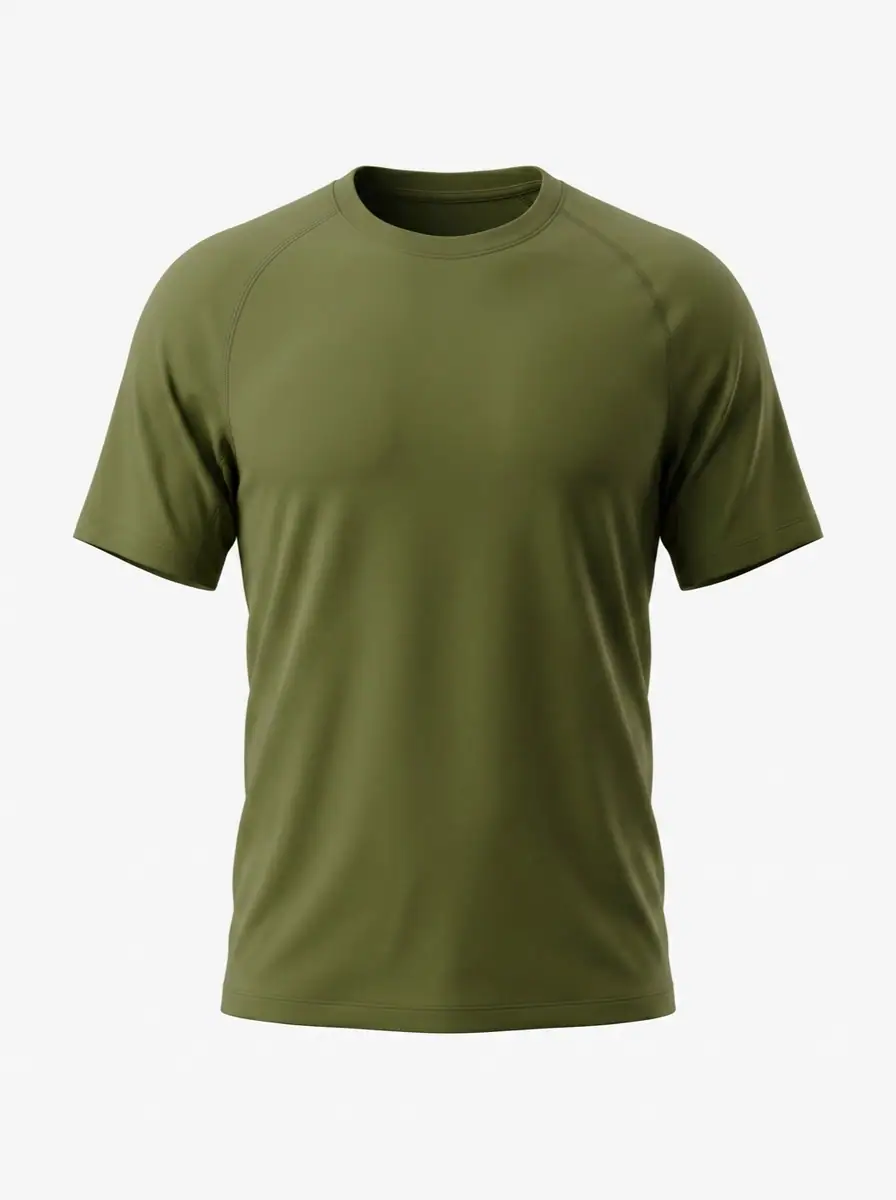 T1-FC001
Military Cooling T-Shirt
A cooling base-layer reference to include when approving visible colour with the rest of a professional clothing kit.
View product details ↗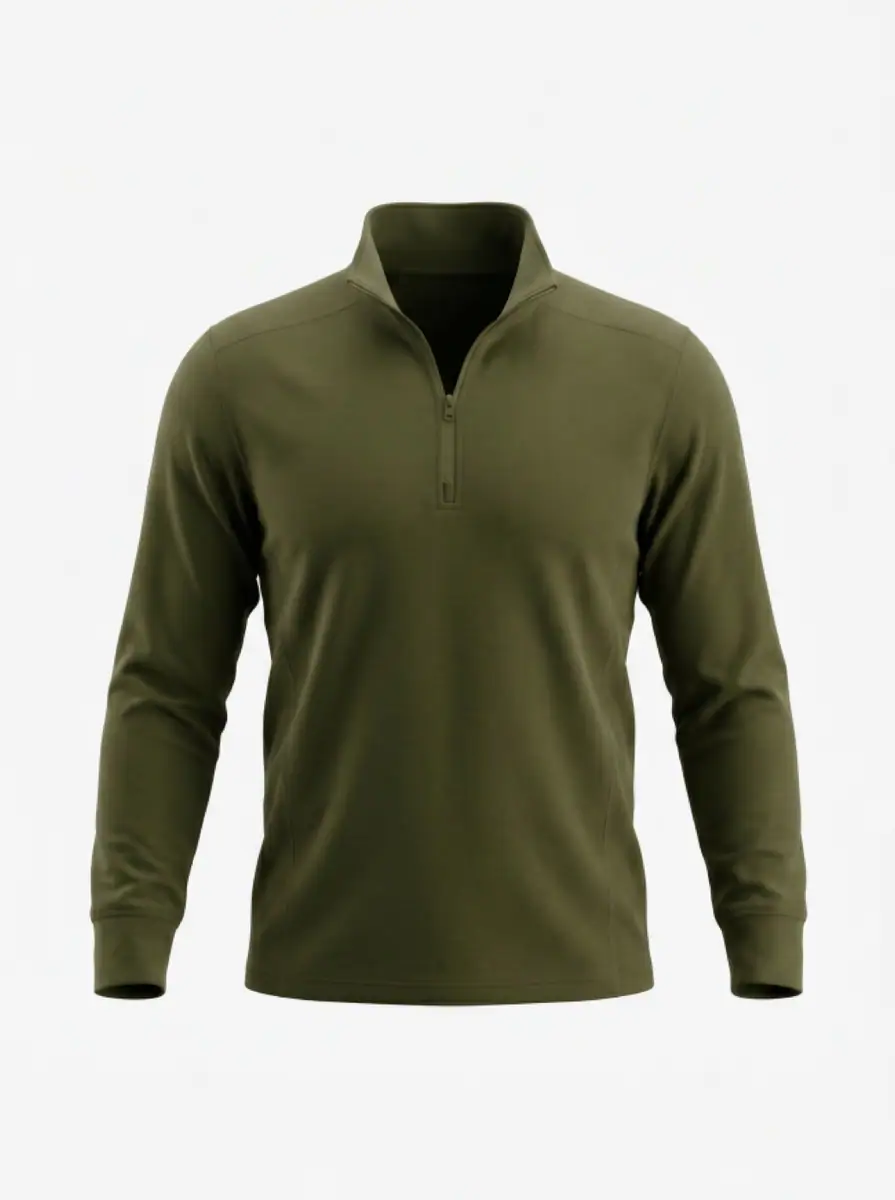 T1-FW001
Military Thermal Underwear Set
Review top and bottom as a coordinated set and connect their approved shade to material and production-lot records.
View product details ↗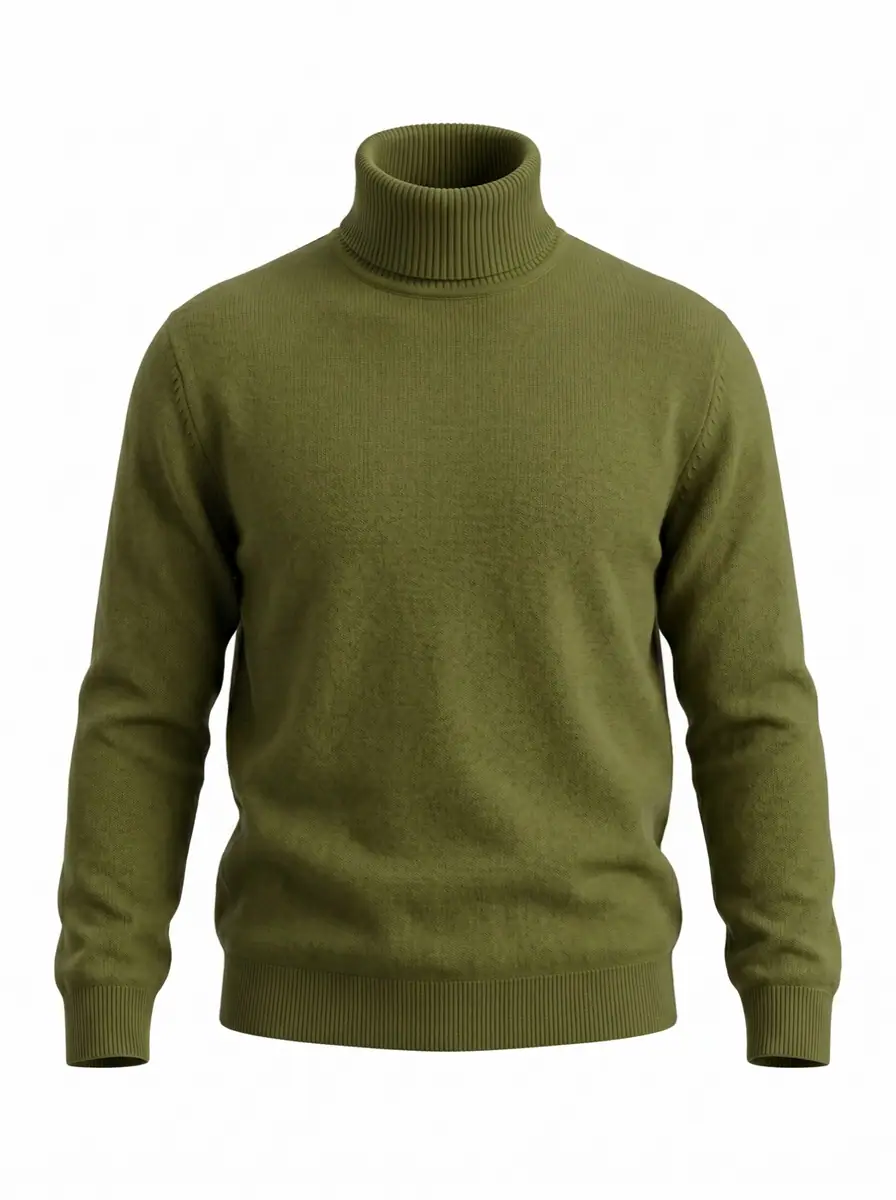 T1-FW004
Training Turtleneck Sweater
A unisex knitted layer requiring its own yarn and component colour approval alongside other military apparel.
View product details ↗