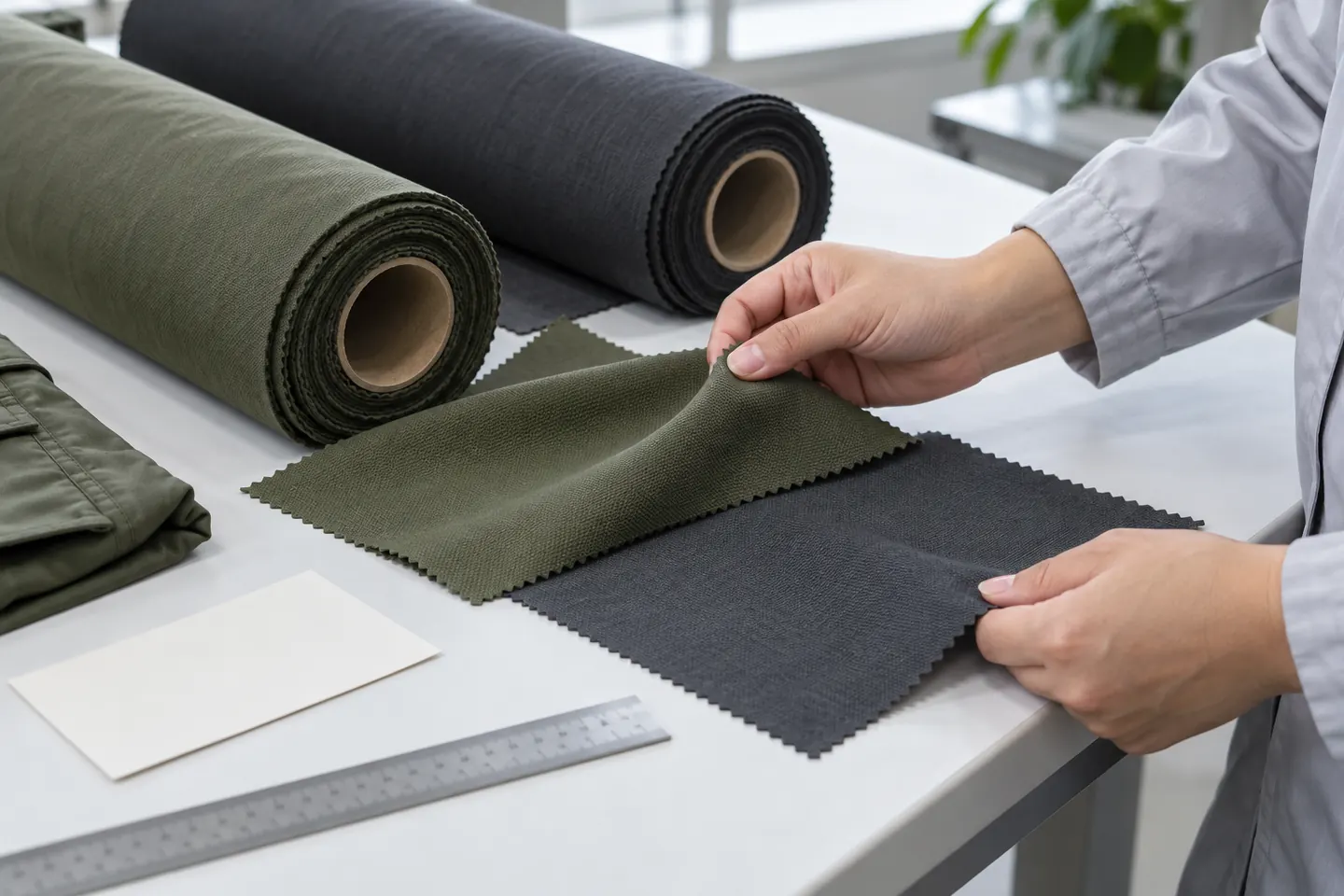
Ask for a traceable inspection route, not only the phrase ‘100% inspected’. For an OEM order, the useful evidence links each incoming roll to an approved material reference, a defined check, a decision on defects and the cut garment lot. Leading Protective describes 100% incoming fabric inspection and an in-house textile lab; the project-specific scope and records should still be agreed with the buyer. The image is an AI-generated illustration, not an inspection record or proof of a particular order.
Define what 100% inspection covers
Inspecting every roll does not mean testing every property of every metre; write down the exact scope.
Agree roll-level checks such as identity, width, appearance, shade and visible faults, plus any project-specific laboratory tests, methods, sampling and acceptance limits. Separate an in-house screening result from independent evidence required by a tender or destination market.
Request a blank inspection-record template before the first delivery so both parties know which fields and decisions will be recorded.
Identify each roll before cutting
Every incoming roll should be identifiable against the approved fabric and its supplier lot.
Record the material code, supplier, lot or dye lot, roll identifier, received quantity, inspection date and approved reference. Keep a physical or digital link between accepted rolls and the cutting batch.
If material is substituted or a new lot differs from the approved sample, ask who can authorize its use and whether a new buyer approval or test is needed.
Agree how defects are held and resolved
A useful inspection system shows what happens when a roll fails, not just that a check took place.
Define how suspect rolls are labelled and isolated, how faults are measured or photographed, and who decides on return, rework, restricted use or rejection. Record the disposition and recheck before release to cutting.
For critical appearance or performance requirements, agree escalation thresholds with the buyer; do not infer a universal pass rate or claim that fabric inspection certifies the finished garment.
Connect material records to the approved garment
The buyer should be able to trace a finished sample or production lot back to the material actually used.
Tie the roll and cutting records to the approved bill of materials, colour reference, size set, sample revision and garment quality checkpoints. Retain the evidence needed for repeat orders and tender documentation.
Before sampling, send the specification, intended use, required test methods, evidence format and approval contacts. Confirm quantity, timing and commercial terms for the specific project rather than assuming standard terms.
Buyer brief checklist
- Approved fabric code, physical reference and specification revision
- Roll-level inspection scope, methods, sampling and acceptance limits
- Supplier lot, dye lot, roll ID and cutting-batch link
- Required in-house and independent evidence, with document owner
- Hold, defect decision, correction and recheck route
- Buyer approval for substitutions and repeat-order changes
- Finished-garment checkpoints, labels and packing reference
Review our fabric inspection and in-house laboratory process ↗
Email the buyer specification to discuss evidence for your project ↗