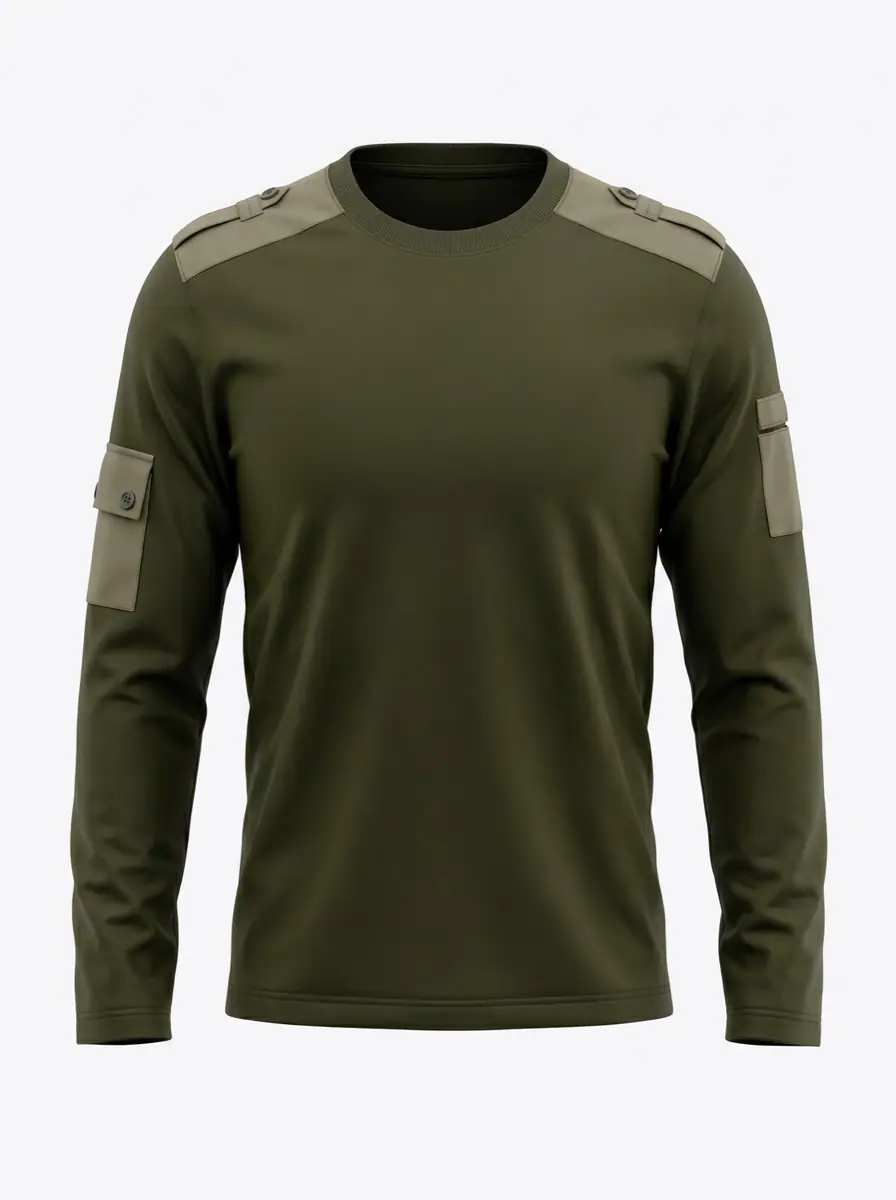
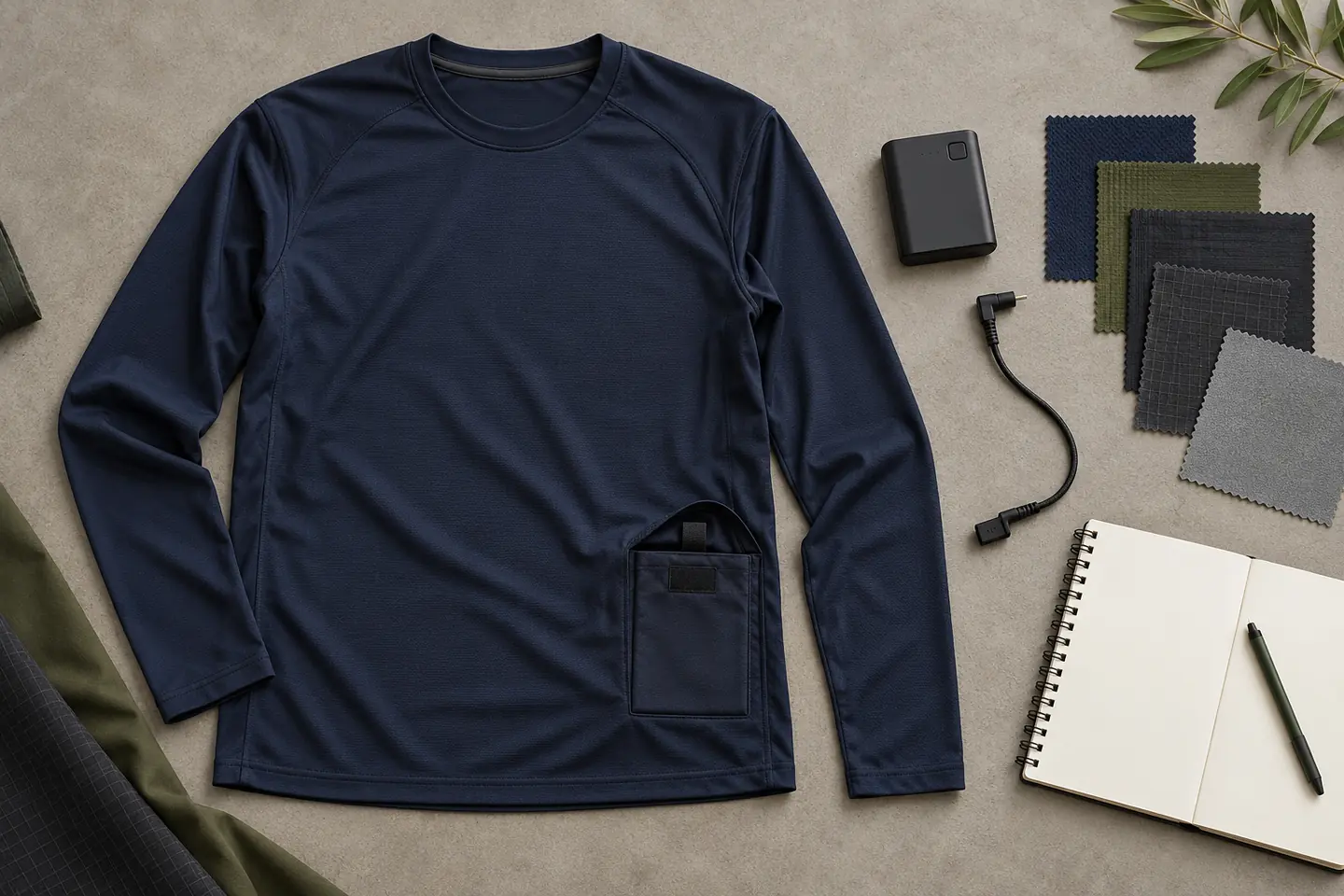
Approve the battery pocket and cable route on the worn, complete garment—not on a flat sketch alone. The wearer must be able to access and remove the specified power unit while the proposed cable path avoids pressure, snagging and unintended strain under the intended equipment. This illustration is an AI concept, not a tested product or factory sample.
Define the operating configuration
Start with the exact power unit, connector, clothing layers and equipment the buyer intends to use.
Record module dimensions, mass, connector orientation and how the unit is removed before care. Decide whether the pocket must be reached while wearing gloves or an outer layer.
Ask the buyer for destination-market electrical and transport requirements; do not infer certification or battery suitability from the garment specification.
Map pocket and connector routing
Place the pocket and cable together so normal movement does not pull on a connection or create a pressure point.
Review seam crossings, bend points, access openings, cable restraint, skin contact and potential snag points. Compare positions on each relevant size, not only on one sample.
The T1-FW002 listing is a catalogue reference for a heated-shirt direction; its published specification does not establish that this concept pocket or cable route is already approved.
Evaluate a worn sample in the intended kit
The buyer should review access and comfort during representative movement with the actual layers and equipment.
Check sitting, bending, reaching and removal of the power unit. Inspect whether the pocket, connector or cable is compressed by belts, packs or protective equipment.
Agree inspection and electrical-safety methods with qualified parties before testing. Do not describe a visual fit review as proof of electrical safety, washability or runtime.
Freeze the reference and request a quote
Approve one documented combination of garment pattern, pocket, cable, connector and power unit.
Retain the sample and record drawings, size set, bill of materials, installation sequence, care instructions, inspection points and decision owner. Re-evaluate a change to any component or supplier.
Send your use case, destination market, size mix, quantity, required evidence, packaging and target timing for a project-specific review. Price, MOQ, certification and lead time are confirmed only after that review.
Buyer brief checklist
- Intended wearer, climate and duty cycle
- Specified power unit and connector
- Pocket location and access method
- Cable route, restraint and skin clearance
- Size-set and equipment compatibility
- Movement and removal review
- Electrical and care evidence requirements
- Approved sample, quantity and destination market
Review garment quality control ↗
Review OEM sample development ↗
Email your heated-shirt brief or start on WhatsApp ↗