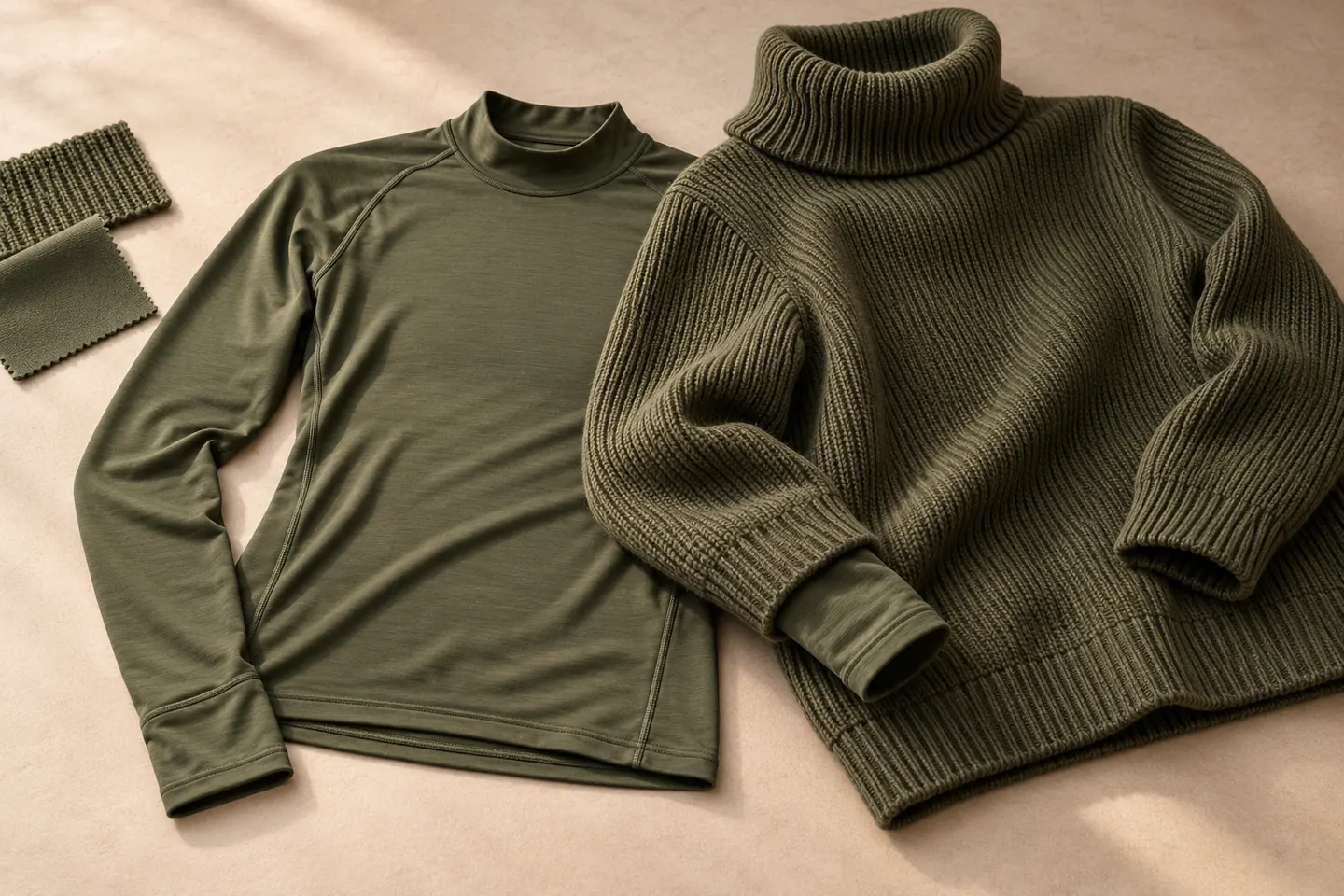
Approve cold-weather garments together when they will be worn together. A base layer that fits by itself can bunch beneath a sweater; a comfortable sweater alone can restrict movement over the intended underwear. Define the wearer's duty cycle, approve representative sizes as a paired system and record which observations or tests are still required. The image is an AI concept, not an exact catalog combination or performance proof.
Define the actual wearing configuration
The buyer brief should specify which garments are worn together and under what outer kit.
Name the base-layer top and bottom, sweater, any shell or equipment, wearer group, activity/rest pattern and expected climate. T1-FW001 and T1-FW004 are catalog references for discussion, not a prevalidated matched system.
Decide whether the sweater is an outer knit layer or sits below another garment, and which combinations must be included in a sample review. Avoid promising a temperature range without a buyer-agreed method.
Approve fit and movement as a pair
A size label shared by two products does not prove their combined fit.
On representative wearers and sizes, assess neckline pressure, sleeve and cuff stacking, arm raise, reach, squat and seated movement. Look for bunching, exposed waist, seam friction and restriction from outer equipment.
Record each garment's size, pattern revision and reference sample; agree whether sizes must be paired one-to-one or selected separately. Confirm the grading approach before bulk size allocation.
Review moisture, insulation and care together
The layer interface matters as much as either fabric on its own.
Observe comfort during activity and rest, including where moisture accumulates between layers and whether the knit blocks drying. Define relevant test conditions and acceptance criteria for the project rather than quoting an unverified result.
Check that care instructions, color requirements and reuse cycles are compatible. If a wash or durability claim is needed, agree the method and evidence before it appears in procurement documents.
Freeze an approved system and change route
The bulk reference should identify both garments and the exact combination reviewed.
Keep paired sample photos, size matrix, fabric and knit references, pattern revisions, observations, agreed methods and open questions together. Specify who signs off changes to yarn, fabric, cuff, neck shape or grading.
Send the wearer profile, climate, estimated quantity, destination market, size range and intended outer kit to request a sample and quotation path. Price, MOQ and lead time remain project-specific confirmations.
Buyer brief checklist
- Wearer, duty cycle, climate and outer equipment
- Named base-layer and sweater references
- Representative paired sizes and grading plan
- Neck, cuff, waist and movement observations
- Moisture and thermal review conditions
- Care, color and durability evidence required
- Approved sample and revision record for both garments
- Owner for substitutions and bulk release
Review garment and fabric quality control ↗
Review the OEM sample-development route ↗
Email your layering brief or start on WhatsApp ↗
Products connected to this solution
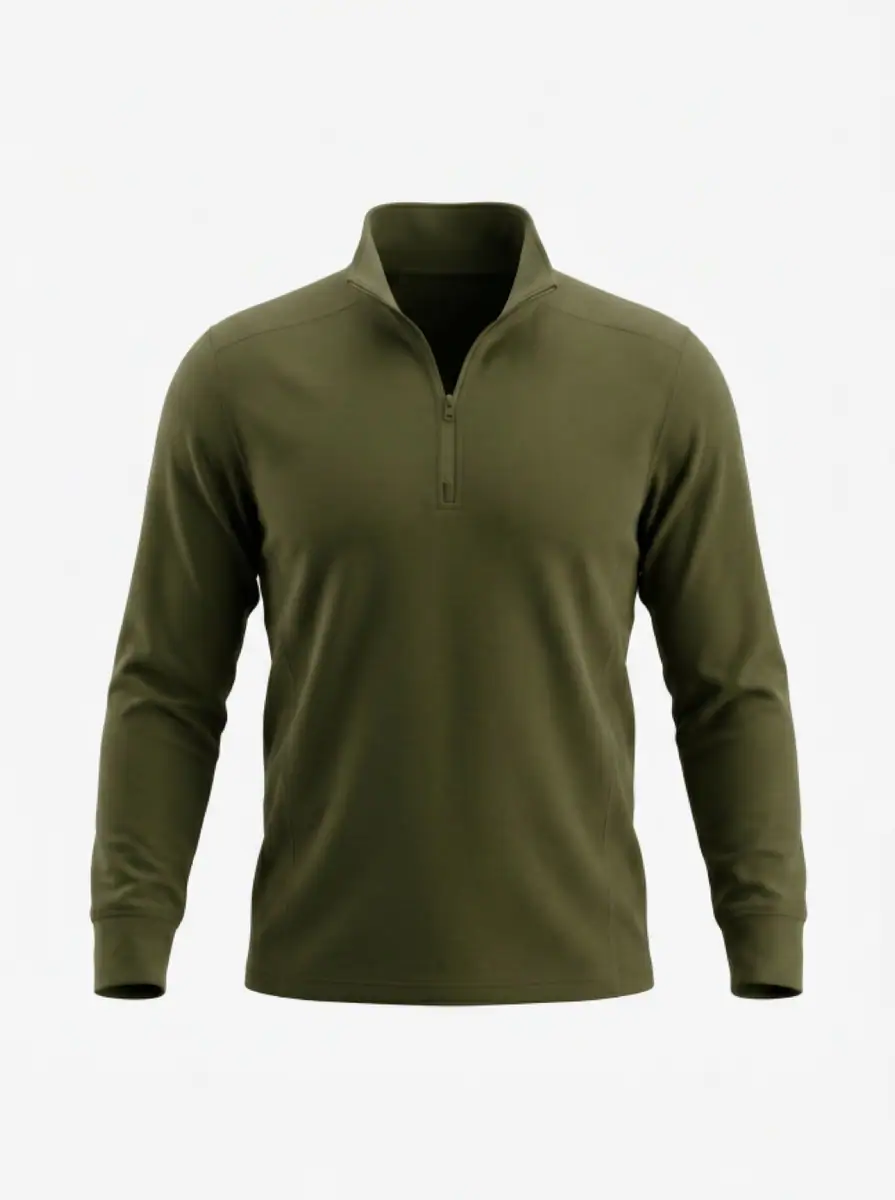 T1-FW001
Military Thermal Underwear Set
Base-layer reference to assess as a complete top-and-bottom set under the intended knit and outer kit.
View product details ↗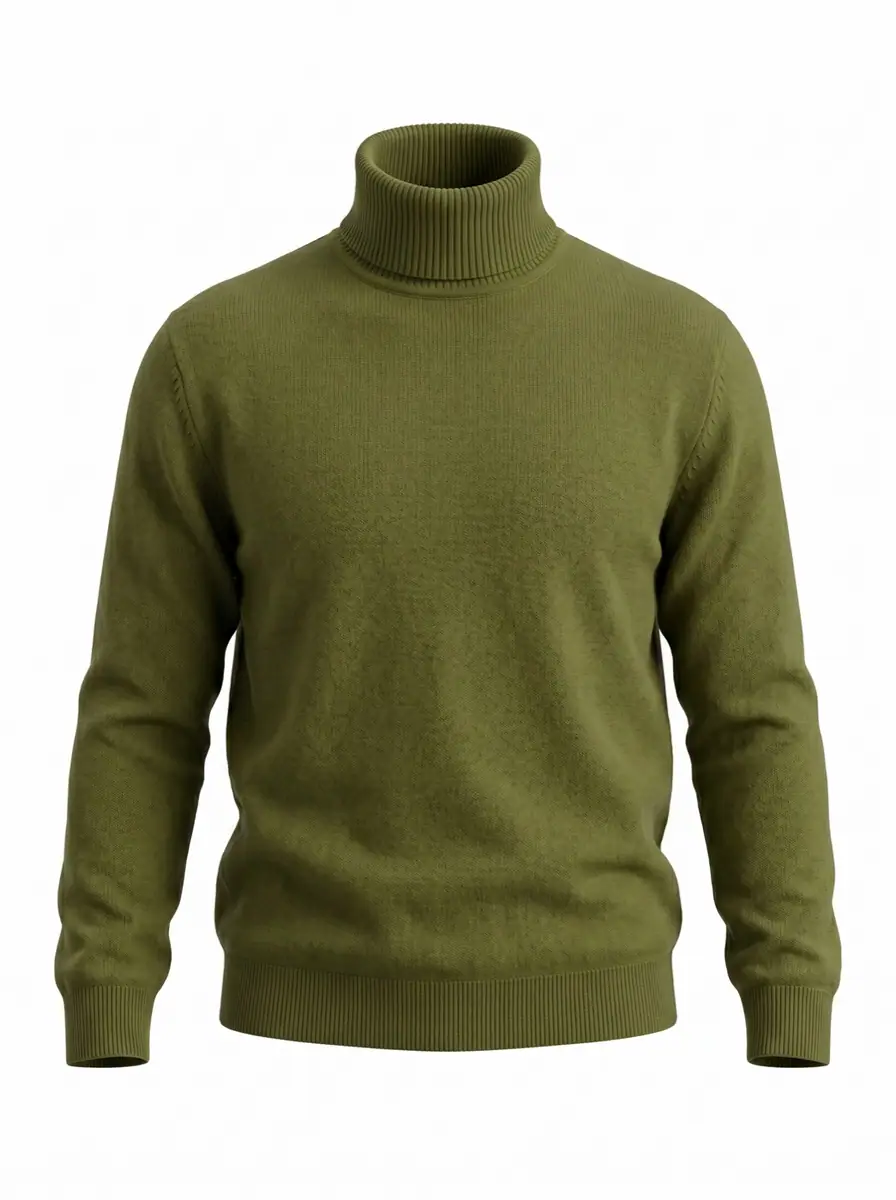 T1-FW004
Training Turtleneck Sweater
Unisex knit reference for checking collar, cuffs, mobility and size pairing over a base layer.
View product details ↗