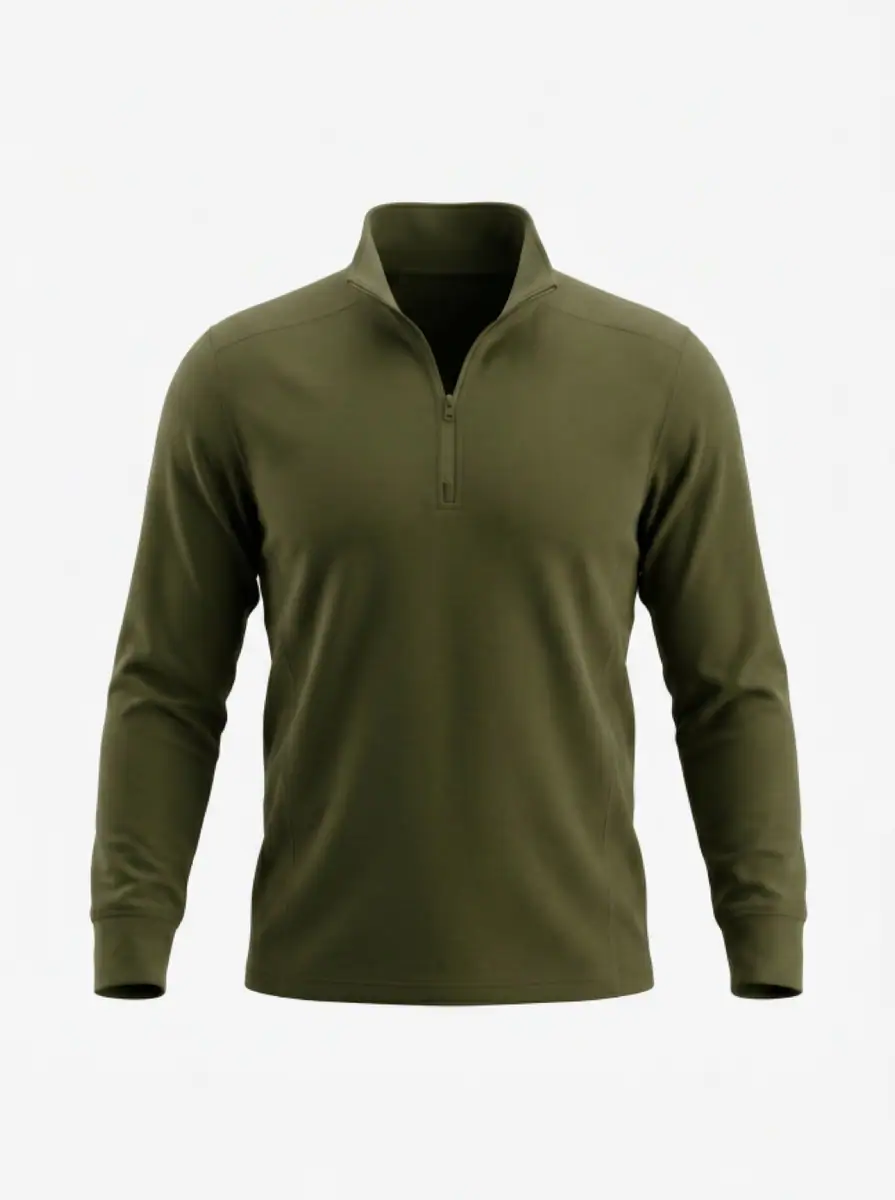
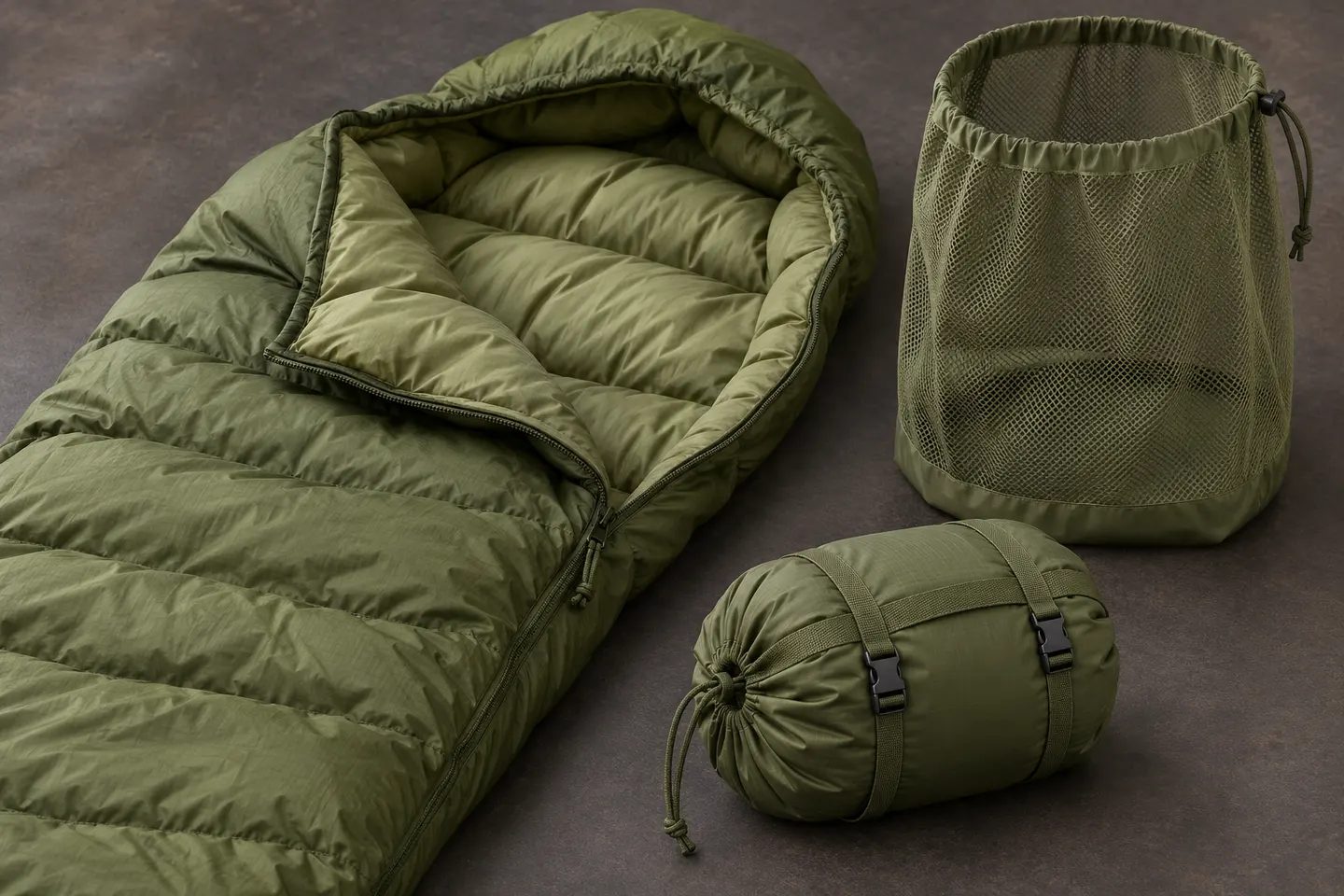
Approve two packing states: the compact pack for transit and the dry, loose condition for storage. Validate both with the proposed bag and fill. The illustration is a concept and does not show a supplied product or test result.
Define the two packing states
Give the supplier a transit volume target and a separate long-term storage requirement.
For transit, specify the actual sack or carton, pack method, expected time compressed and any stacking or moisture conditions relevant to the route. For storage, agree how the dry bag will be kept loose and what unpacking instructions travel with it.
Confirm the fill construction and supplier care guidance. Do not transfer a limit for one insulation type to another or assume a packed size proves long-term storage suitability.
Check recovery on the approved sample
Record a baseline before packing and compare the same bag after the agreed unpacking interval.
Agree the recovery environment, how the bag will be laid out, when it will be inspected and which zones will be compared. Note persistent flat areas, fill movement, visible moisture and damage to the shell or closure.
Use the same locations and setup for a repeatable comparison. Loft recovery is an appearance and construction check. Where a thermal rating is required, specify separate test evidence for the exact model and conditions.
Link packing approval to the order
Confirm which pack, storage instructions and evidence will apply to production shipments.
Retain the approved sample and packing revision, and agree who will release a change to fill, sack, carton or compression method. Define how a nonconforming unit will be held and reviewed before shipment.
For a quotation, send the intended use, fill and size requirements, size quantities, transport route, packed volume target, expected storage duration and evidence required. Ask the supplier to confirm feasibility, price and timing for that scope.
Buyer brief checklist
- Bag model, fill construction and size quantities
- Transit sack or carton, compression duration and volume target
- Dry loose-storage plan and unpacking instructions
- Recovery setup, interval and inspection zones
- Approval owner, retained sample and packing revision
- Separate thermal evidence and quotation scope, if required
Review sleeping systems ↗
Review quality and sample checks ↗